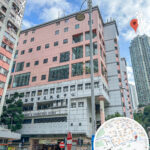
🛣️【Forbes Street (科士街)】 is a short, story-filled street located in Kennedy Town, Sai Wan on Hong Kong Island. Running from east to west as a one-way road, it spans about 200 metres, connecting Smithfield and Cadogan Street. Though only around 0.2 km long, it is famous for the stone wall trees lining its southern side. Comprising 27 banyan trees clinging to the stone masonry, this is the largest tree wall in Hong Kong, boasting rich historical and ecological value.
🏭 Historical Background
- The street name “Forbes” comes from the American Forbes family, whose members worked for Russell & Co.
- Russell & Co. established the “Hong Kong Rope Works” here, making it one of the early industrial heritage sites.
- Forbes Street has existed since the late 19th century, and the stone walls were likely built in the 1890s.
—
🧭 Fast Facts
Item Details Name Forbes Street District Kennedy Town, Central and Western District Starting Point Smithfield Ending Point Cadogan Street Length Approx. 200 metres (approx. 0.12 miles) Traffic Direction One-way westbound Speed Limit 50 km/h MTR Connection Island Line Kennedy Town Station, Exit C —
🚏 Transport Information
🚇 MTR
Located right next to MTR Kennedy Town Station, accessible immediately via Exit C.
🚐 Minibuses & Buses
- Features a red minibus stop, with multiple routes passing through.
- It used to be an en-route stop for bus route 43X, which has now been replaced by route 43M, featuring a stop at Kennedy Town Station.
—
🌳 Stone Wall Trees
- The most famous sight along Forbes Street is the 27 Chinese Banyan trees (Ficus microcarpa) growing across three stone masonry retaining walls on the southern side.
- These banyan trees cling to the stone walls, forming the largest “tree wall” in Hong Kong.
- Some of the trees are over a century old and are listed in the Register of Old and Valuable Trees.
- It is a popular photo spot for hipsters and photography enthusiasts, as well as a collective memory for local residents.
Ecological Value
- Provides a habitat for Spotted Doves and Eurasian Tree Sparrows.
- The fruits serve as food for birds, which then help disperse seeds to other areas.
- Reduces direct sunlight, lowering ground temperatures.
- Absorbs air pollutants, improving street-level air quality.
Community Significance
- Provides shade for residents, becoming a part of daily neighborhood life.
- When MTR built the Island Line extension, they specially shifted the design of Kennedy Town Station to preserve the tree wall.
—
🛝 Community Facilities
- Forbes Street Temporary Playground
- Nearby Landmarks: Sai Wan Estate, Kennedy Town Swimming Pool
—
🏙️ Blending City and Nature
The stone wall trees of Forbes Street blend seamlessly with the old tenement buildings of Kennedy Town, standing as a testament to the coexistence of urban change and nature.
“Standing strong for a century, the stone wall trees have witnessed the evolution of the Western District. Sitting right next to Kennedy Town’s old tenements without looking a bit out of place, they truly are an icon of Sai Wan.” —— V’air Hong Kong
—
🐓 History of the Poultry Wholesalers
From the early 20th century to the 1980s, the junction of Forbes Street and Davis Street was a major hub for live poultry wholesalers (locally known as “chicken and duck lanes”).
Characteristics and Issues
- The squawking of chickens and ducks at 4 a.m. often woke residents up.
- The smell of droppings and traffic congestion caused quite a nuisance to the neighbourhood.
- Wholesalers used wooden carts or bamboo sticks to herd geese across Catchick Street and Belcher’s Street.
The Outcome
- In 1987, they were relocated to the Western District Temporary Poultry Market.
- In the 1990s, they moved again to the Western Wholesale Food Market on Fung Mat Road.
—
🏞 Nearby Landmarks
Landmark English Name 科士街遊樂場 Forbes Street Playground 堅尼地城遊樂場 Kennedy Town Playground 西環邨 Sai Wan Estate 佐治五世公園石牆樹 King George V Memorial Park Stone Wall Trees —