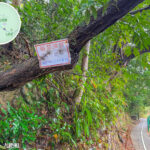
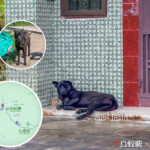
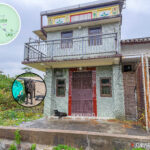
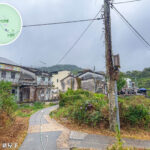
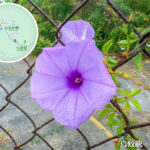
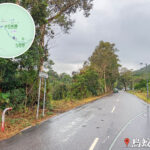
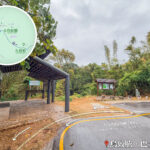
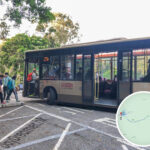
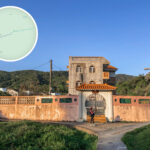
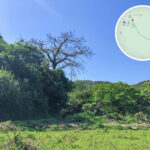
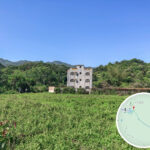
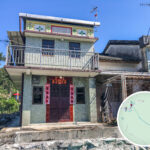
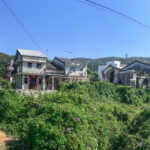
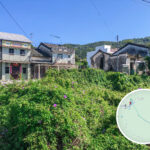
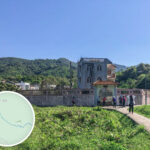
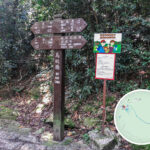
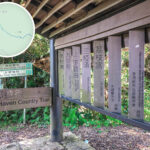
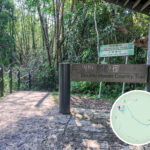
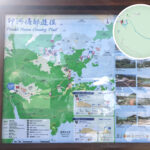
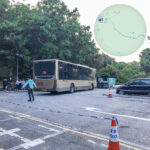
🏡【San Uk Ha (新屋下)】 is one of the seven Hakka villages located in the Wu Kau Tang area of the North District in the New Territories, Hong Kong. Together with San Uk Tsuen, Ling Pei, Lo Wai, and others, it forms the Wu Kau Tang village cluster. It is a Hakka village with a history spanning over 300 years. The villagers are primarily surnamed Li and Wong, whose ancestors migrated from Wuhua and Meixian in Guangdong to settle here during the Kangxi period of the Qing Dynasty (around 1695). Their descendants later branched out to form settlements such as San Uk Ha. The village retains its traditional Hakka architectural style and integrates with the surrounding natural environment. The lowland forests are rich in native species, including 164 types of trees and various dragonflies and butterflies, showcasing the ecological and cultural diversity of Hong Kong’s countryside. —
📍 Location
- Located in the Wu Kau Tang area, it is one of the seven Hakka villages.
- Belongs to Sha Tau Kok’s Tenth Yeuk, a traditional alliance system between villages.
—
🏘️ Village Features
- A typical Hakka village that preserves traditional architectural styles.
- The village name “San Uk” (New House) reflects its history of early reclamation and settlement.
—
🏡 Origin of the Name
The name “San Uk Ha” (literally “Below New House”) originates from its lower elevation compared to “San Uk Tsuen,” hence the term “Ha” (Below). —
🧑🏻🌾 Ethnic Background
- Founding Era: Qing Dynasty, Kangxi period, around 1695.
- Main Surnames: Li Clan, Wong Clan.
- Ancestral Origins:
- Li Clan: Wuhua Xikeng Village → Yongle Shuikou Village → Guishan Longgang → Xin’an County (modern-day Hong Kong).
- Wong Clan: Meixian Songyuan → Wu Kau Tang → Branching to locations like Kam Chuk Pai.
— San Uk Ha village is situated on the western fringe of Plover Cove Country Park and serves as an important node on hiking routes, leading to attractions such as Lai Chi Wo and Sam A Tsuen. Near the village, there is also the Wu Kau Tang Anti-Japanese Martyrs Monument, which commemorates the heroic deeds of villagers who fought against the Japanese alongside the East River Column’s Hong Kong-Kowloon Brigade during World War II, highlighting its historical significance. Despite the impact of modern development on some village structures, San Uk Ha still retains its Hakka traditions and a tranquil rural atmosphere, serving as a window to explore the culture and natural landscape of the northeastern New Territories. —
🏯 Hakka Architecture
- Grey Brick Houses: Characterised by low roofs, typical of Hakka residences, with thick walls and a solid structure that provided defensive capabilities.
- Ancestral Halls: Places for worshipping ancestors and holding festivals and rituals, bearing witness to the Hakka clan system.
- Stone Walls: Constructed from local stone, witnessing the history of the village.
- Village Archway: Symbolising the identity and traditions of the village.
- Stone Paths: Most paths within the village are paved with stones.
—
🪧 Cultural Heritage
- Preserves numerous Hakka architectural features, such as ancestral halls, stone houses, ancient wells, and stone steps.
- Wu Kau Tang Anti-Japanese Martyrs Monument: Commemorates the villagers and soldiers who sacrificed their lives during the war.
—
🥾 Surrounding Environment
- Adjacent to Plover Cove Country Park, boasting a rich natural landscape.
- Serves as a starting point for multiple hiking routes, including paths to Lai Chi Wo and Kuk Po.
—
🚶♂️ Hiking and Exploration
- Bride’s Pool Waterfall: Accessible via mountain trails, offering beautiful scenery.
- Luk Keng: Passes through pristine woodlands and streams.
- Kuk Po: Allows exploration of abandoned villages and wetland ecology.
—
🌳 Ecological Environment and Natural Resources
Ecological Resources Quantity and Features Tree Species Over 164 species, such as Aquilaria sinensis Dragonflies Over 30 species, such as the Crocothemis servilia Butterflies Over 50 species, including various Yellow butterflies and Swallowtails Invertebrates Various large native species —
🗺️ The Seven Villages of Wu Kau Tang
Village Name English Name Features San Uk Tsuen San Uk Tsuen Hakka village with traditional architecture San Uk Ha San Uk Ha Historical significance, anti-war base Sam Ka Tsuen Sam Ka Tsuen Small village, near the countryside Ho Pui Ho Pui Near streams, tranquil environment Ling Pei Ling Pei Village on the hillside with good views Lo Wai Lo Wai Ancient village, retains old walls Tin Sum Tsuen Tin Sum Tsuen One of the starting points for the Wu Kau Tang Country Trail —
🧭 Historical Development
Period Event Qing Dynasty, Kangxi period (c. 1695) Hakka people migrated from Wuhua, Guangdong, and established San Uk Ha Village Anti-Japanese War (1937–1945) Became an important base for the East River Column’s Hong Kong-Kowloon Brigade Modern Era Gradual outward migration of the population, but retains a wealth of historical buildings and cultural heritage —
🚧 Current Status and Challenges
- Black Rainstorm Flooding: Collapse of Bride’s Pool Road in August 2025 due to heavy rainfall.
- Limited Access: Requires multiple transfers to reach the city centre.
- Aging Population: The village is primarily inhabited by the elderly and children.
- Low Relocation Desire: Villagers are committed to remaining in the village.