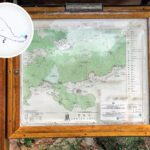
🏡【Shui Hau Village (水口村)】 is located in the southern part of Lantau Island, situated between Tong Fuk and Shek Pik. It is an ancient settlement boasting over 400 years of history. Backed by mountain ranges and facing Shui Hau Bay, the village enjoys an excellent geographical position and is primarily composed of indigenous residents from three clans: Chan, Chi, and Fung. Legend has it that the villagers originally lived in Shek Pik but migrated here to escape military conscription. The village name “Shui Hau” translates literally to “water mouth,” meaning the place where rivers meet the sea, which directly reflects its physical geography. The village preserves a wealth of traditional customs, such as ritual worship of “Tai Wong Ye” to pray for favorable weather, and the veneration of sacred “divine stones” pulled from the sea, showcasing a tight bond between spiritual belief and daily life. In recent years, Shui Hau Village has drawn large crowds of tourists due to its “Mirror of the Sky” phenomenon on the mudflats and clam-digging activities. However, its ecological value has also garnered intense attention; the mudflats nurture over 180 species, including the endangered horseshoe crab. —
🕰️ Village History & Etymology
- Founded by indigenous residents belonging to the Chan, Chi, and Fung clans.
- The name “Shui Hau” means river estuary, symbolizing the village’s position where fresh water meets the sea.
- The village retains numerous historical buildings and cultural vestiges to this day.
— Beyond its natural landscapes, 【Shui Hau Village】 is rich in historic architecture and revitalization projects. Examples include “House No. 49,” built in the 1920s, and the “Wo Liu” (granary) once used for storing grain, which has now been transformed into a cultural venue serving the traditional dish *Lai Wok Bin* (rice paste sheets cooked on a wok’s edge). Nevertheless, with the booming tourism trade, villagers face ecological challenges brought on by visitors over-digging for clams and damaging the habitat. This has prompted local educational measures, such as the introduction of a “Clam Digging Gauge Card.” Furthermore, the village store, “Station Store,” stands as a testament to the residents’ dedication to rural life; the shopkeeper, Mrs. Chi, strives to preserve the fruits of her late husband’s hard work while advocating for a sustainable balance between development and conservation. Shui Hau Village stands right at the intersection of tradition and modernity, serving as both an ecological treasure trove and a living textbook for cultural heritage. —
🚍 Transportation Information
Starting Point Transport Mode Travel Time Tung Chung 🚌 New Lantao Bus Route 11 or 11A Approx. 30 minutes Mui Wo 🚌 New Lantao Bus Route 3M Approx. 25–30 minutes Shui Hau Village to Mudflats 🚶♀️ On Foot Approx. 10–15 minutes —
🎶 Culture & Tradition
The most representative cultural heritage of Shui Hau Village is the “Weitou Folk Songs,” passed down orally by village elders, which vividly depict the rural lifestyles and wedding customs of yesteryear.
- The folk songs are themed around the months of the year, with lyrics highlighting daily details like birds, farming, and marriage.
- The dialect spoken is Weitou, which is similar to the language used in the walled villages of Yuen Long, though subtle branch variations exist.
- The documentary *The Folk Songs of Shui Hau Grandmas*, a collaboration between Urban Diary and director Chan Ho-lun, captures and preserves this invaluable oral culture.
—
🏯 Built Heritage
Two major buildings inside the village have undergone revitalization and conservation efforts:
Building Key Features 🏠 No. 49 Shui Hau Village Built in the 1920s, blending Qing Dynasty architectural styles. The roof features a “flat front, sloped back” design to aid drainage. Granite blocks were used for the front section, while green bricks make up the rear. 🌾 Wo Liu (Granary) Originally used to store grains and farming tools; its cooking stoves are preserved, and it now serves as a venue for traditional *Lai Wok Bin* delicacies. 🧧 Beliefs & Customs
- Tai Wong Ye (Great King Deity): The guardian deity worshipped by villagers, symbolizing the earth and mountain gods.
- She Tan (Earth God Altar): Enshrines two “divine stones,” which according to legend were sacred rocks hauled in by villagers while out fishing at sea, symbolizing the protection of the Earth God.
Gate Stones: Located at the entryways of the upper ridge (“Sheung Luk”) and lower ridge (“Ha Luk”), these stones are adorned with couplets and Fai Chun to bring peace and safety. —
🌿 Ecology & Tourism
🌊 Mudflats & Wetlands
- Home to mangroves, streams, and wetlands, boasting exceptionally high biodiversity.
- Shui Hau Bay shelters over 180 species, including horseshoe crabs and Romer’s Tree Frogs.
- Abandoned agricultural plots have transitioned into wetlands, though some groups have initiated re-cultivation projects recently to plant rice and lotus root.
- Villagers live in symbiosis with nature, maintaining a deep respect for the land and ecosystem.
🐚 Clam Digging
- Peak Season: From July to October every year, heavily dependent on low tide schedules.
- Common Clam Species: Meretrix lyrata (white clams), triangle clams, and Asaphis violascens.
- A popular parent-child outdoor activity that blends education with fun; villagers urge tourists to practice conservation and refrain from taking juvenile clams.
🌅 Mirror of the Sky
- When the tide recedes after rainfall, the thin sheet of water on the mudflats acts like a mirror, reflecting the sky and visitors to create a photography hotspot.
- Best Time to Shoot: Around sunrise or sunset, utilizing silhouettes to create artistic compositions.
🌌 Outdoor Sports & Stargazing
- Kiteboarding: Shui Hau Bay offers stable wind directions, making it an ideal spot for beginners.
- Stargazing Hotspot: Minimal light pollution makes it a favorite location, equipped with an astronomical observation post.
—
🛠️ Revitalization & Cultural Preservation
- The School of Architecture at The Chinese University of Hong Kong has collaborated with villagers to restore historic buildings and organize exhibitions and workshops.
- Published *Shui Hau Voices* and released the documentary *The Folk Songs of Shui Hau Grandmas*.
- Established an Eco-Cultural Trail that links together all the critical points of interest throughout the village.
—