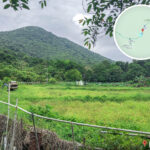
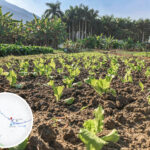
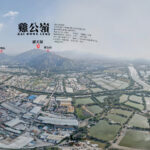
🌾 【Farmland】is mainly distributed in the New Territories, especially around Yuen Long, North District, and Tai Po. Blessed with river valleys and alluvial plains, these areas boast fertile soil and abundant water sources, creating a natural environment perfect for farming. While Hong Kong’s total agricultural land spans around 4,077 hectares, only about 729 hectares are actively farmed, which is less than 20%. Most farms operate as small-scale family businesses growing vegetables, flowers, and fruit trees. Recently, new models like organic farming, hydroponics, and aquaponics are also stepping into the spotlight.
📌 Key Information
Item Data 📏 Total Farmland Area 4,077 hectares, with 729 hectares actively farmed (approx. 19%), and nearly half dedicated to vegetable cultivation. 🌿 Main Uses Vegetables: 339 hectares (Chinese flowering cabbage, choy sum, lettuce, etc.)
Flowers: 116 hectares (gladiolus, lily, chrysanthemum)
Fruit trees: 254 hectares (longan, lychee, citrus)
Field crops: 5 hectares (small amounts of beans and tubers)🏡 Number of Farms Around 2,500 farms, employing about 4,300 people. 📦 Output In 2023, local vegetable production reached about 15,000 tonnes, supplying 1.8–1.9% of the territory’s demand. On average, daily production stands at 42 tonnes of vegetables, 10,500 live chickens, and 230 live pigs. 📊 Supply Ratio Local vegetables cover just 1.8–1.9% of total HK demand; live poultry reaches 100% self-sufficiency; live pig supply sits at around 9%. 💰 Economic Contribution In 2024, the gross value of local agricultural production was about HK$928 million, with crop production making up $385 million, livestock at $279 million, and poultry at $264 million. —However, in highly urbanised Hong Kong, 【Farmland】faces ongoing challenges. City development and new town planning keep shrinking agricultural land, leaving over 80% of it abandoned. Even though local farming meets less than 2% of our vegetable demand, its value goes way beyond food production—it is vital for cultural heritage and ecological conservation. 🍃 Farmland preserves the wisdom and collective memory of rural village life while providing green landscapes for Hong Kong, reminding us that just outside the bustling city, a touch of countryside still carries our history and nature forward.—
📍 Farmland Distribution & Geographical Features
District Ratio Features 🌿 North District 35% Concentrated in Fanling and Sheung Shui; consists of river valley alluvial plains with stable water sources. 🌾 Yuen Long 34% Includes Kam Tin, Ping Shan, and Pat Heung; functions as the largest core agricultural zone. 🍊 Tai Po 12% Represented by the Lam Tsuen Valley, it is a traditional farming area. 🏝️ Other Districts Small amount Scattered across Tuen Mun, Sai Kung, Tsuen Wan, and the Outlying Islands. —
🌱 Cultural & Ecological Significance of Farmland
- Cultural Heritage: Farming culture in New Territories villages is deeply intertwined with traditional festivals like autumn harvests and Da Jiao (Taiping Qingjie).
- Ecological Functions: Farmland connects with fishponds and wetlands, providing vital habitats for migratory birds like egrets and Black-faced Spoonbills.
- Urban Pressure: Since the new town developments in the 1970s, farmland has been gradually acquired by developers, with some spots turned into “brownfield sites,” sparking ecology and land-use debates.
—
🥊 Agricultural Characteristics & Challenges
- Characteristics
- Small-scale, high-intensity, and meticulous farming.
- Diverse models: Traditional farming, organic farming, hydroponics, and aquaponics.
- High-value flower exports serve as an important source of income.
- Challenges
- Urbanisation pressure: New town developments in the New Territories continue to eat into farmland.
- Fallow land: Over 80% of farmland is not actively used.
- Food reliance: Hong Kong is heavily reliant on imports; agriculture accounts for less than 0.1% of local GDP.
—
📍 Quick Overview of Key Districts
District Ratio Features North District 35% River valley plains with abundant water sources. Yuen Long 34% Largest agricultural core with dense village clusters. Tai Po 12% Lam Tsuen Valley, a traditional farming area. Tuen Mun, Sai Kung, Tsuen Wan, Outlying Islands Small amount Scattered distribution, blending in leisure farming.