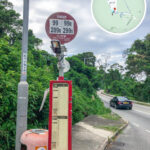
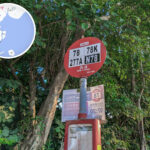
🚏 【Bus Stops】 serve as vital nodes within the city’s public transit framework. With over 8,700 franchised bus stops scattered territory-wide, they are strategically categorized into “Bus Termini” and “Intermediate Stops,” with designs that carefully balance safety, commuter convenience, and overall traffic flow. They act as the primary gateways for passengers entering the public transport network, while remaining a core pillar of urban road planning and local neighborhood life.
Bus stops are indispensable facilities for the daily operations of franchised buses, providing designated berthing points along fixed routes for passengers to board and alight safely. Ubiquitous across urban districts and the New Territories, they seamlessly link residential quarters, commercial zones, MTR rail stations, and major transport hubs, anchoring themselves as an essential foundation of daily commuting.
🚌 Introduction to Hong Kong Bus Stops
【Bus Stops】across Hong Kong form the critical structural joints of the urban public transport grid. Numbering more than 8,700 in total, these stops are split between major “Bus Termini” and standard “Intermediate Stops.” Far beyond mere spaces to step on or off a bus, they represent active components of neighborhood planning, traffic congestion management, and vibrant urban lifestyles. The precise layout, design, and spatial distribution of these stops mirror the intense transit demands and highly optimized land-use patterns characteristic of Hong Kong’s high-density urbanism.
—
📍 Geographical Distribution & Spatial Traits
- Territory-Wide Coverage: Bus stops thoroughly span Hong Kong Island, Kowloon, the New Territories, and the Outlying Islands, directly connecting residential estates, core business zones, MTR stations, and multi-modal transport hubs.
- Distance Planning: Within built-up urban districts, the ideal spacing between bus stops is planned at roughly 400–600 meters to guarantee comfortable walking access for commuters.
- Placement Principles: Stop locations must align with existing pedestrian footpath networks and formal crossing points, ensuring they do not obstruct sightlines or impede oncoming vehicular traffic.
- Rural Variations: Across the New Territories and Outlying Islands, stops are naturally spaced further apart, frequently situated right at village entrances or adjacent to rural ferry piers.
—
🏗️ Structural Design & Passenger Facilities
- Signage & Road Markings: Road surfaces are explicitly painted with “BUS STOP” clear zones, while vertical stop posts display comprehensive route itineraries, operating hours, and frequency tables.
- Dedicated Bus Bays: Where road width permits, lay-bys or indented bus bays are constructed to allow buses to pull out of active traffic lanes, preventing bottlenecks.
- Sheltered Bus Stops: Modern shelters come equipped with protective canopies, passenger seating, and electronic information displays to elevate commuter comfort during inclement weather.
- Smart Technology Integration: An increasing number of shelters feature real-time arrival informative screens, synced perfectly with mobile applications to deliver live ETA data.
—
🏢 Classification & Operational Types
Type Operational Characteristics Iconic Examples Bus Terminus The structural end-point of routes; features multi-lane boarding bays, passenger queuing barriers, regulator offices, and staff rest areas. Central (Exchange Square), Tin Shui Wai Town Centre Intermediate Stop Standard curbside or bay-style stops along a route; makes up the vast majority of stops nationwide. Nathan Road Corridor in Yau Ma Tei Special Purpose Stop Restricted exclusively for alighting passengers, designated wheelchair boarding, or designated temporary operations. Temporary roadside setups outside major MTR stations during service disruptions —
⚖️ Statutory Regulations & Assets Management
- Public Bus Services Regulations: Legally mandates that buses must only pick up and drop off passengers at officially designated stops. Drivers who skip a stop with waiting passengers without valid reason face a statutory fine of up to 2,000 dollars.
- Traffic Safety Controls: The gazetting of any new bus stop must fully account for corner sightlines, localized traffic volume, and community feedback.
- Corporate Management: The physical infrastructure, route panels, and shelters are meticulously maintained and managed by their respective franchised operators, such as KMB and Citybus.
—
🌆 Community Synergy & Urban Living
- Commuter Accessibility: Bus stops are strategically clustered near residential estates, shopping malls, and rail lines to facilitate fluid, everyday commuting and seamless inter-modal transfers.
- Transit-Oriented Development: Numerous major bus termini feature large-scale residential towers or commercial shopping plazas built directly above them, turning the transit hub into a self-contained community core.
- Local Cultural Identity: Bus stop names are frequently derived from historic landmarks, local street names, or ancestral villages, beautifully preserving and reflecting the deep neighborhood identity of the area.
—