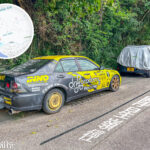
🚗 【Automotive】culture in Hong Kong does not revolve around a manufacturing core, but instead focuses primarily on import, retail, and aftermarket services. Due to the city’s limited land premium, dense population, and compact road network, owning a car here serves not only as a convenient private transport option but also as a distinct status symbol and lifestyle statement. From ultra-luxury brand showrooms concentrated in Admiralty to a highly active pre-owned vehicle market centered in Tsuen Wan, the automotive landscape mirrors Hong Kong’s cosmopolitan nature and diverse consumer preferences.
📌 Basic Information
Category Key Features Common Brands in HK Policy Outlook ⛽ ICE Vehicles Traditional mainstream options; highly mature repair and servicing networks Toyota Corolla, Nissan Serena New registrations will cease after 2035 💎 Hybrid Vehicles Dual petrol-electric powertrains offering extended driving range Toyota Prius, Honda Freed New registrations will also cease after 2035 🔋 Electric Vehicles (EVs) Zero exhaust emissions, backed by government incentives, rapidly expanding charging networks; eco-friendly Tesla, BYD, Kia Has already become the dominant choice for new registrations —In recent years, electric vehicles (EVs) have experienced rapid adoption across Hong Kong, firmly establishing themselves as the absolute mainstream choice for newly registered private cars. The government plans to completely cease the registration of new petrol and hybrid private cars by 2035, accelerating the city’s transition toward zero-emission transit. Backed by a charging infrastructure that is expanding step-by-step in suburban hubs like Sha Tin, Hong Kong’s automotive sector is successfully pivoting from traditional internal combustion engines toward green, smart mobility—sculpting a futuristic blueprint that fuses environmental sustainability with cutting-edge tech.—
🚗 Structural Breakdown of the HK Automotive Industry
- Zero Domestic Production: Hong Kong has no local automotive manufacturing bases; the entire sector relies heavily on authorized importers, independent dealerships, service workshops, and parts distributors.
- Tertiary Sector Focused: The economic value generated by the automotive sector stems predominantly from vehicle retail, after-sales service, specialized maintenance, and spare parts logistics.
- Shift in Technical Skills: While mechanics historically focused exclusively on traditional internal combustion engines, they now must master battery management systems (BMS), software diagnostics, and smart mobility architectures.
- Highly Diverse Brand Presence: Mainstream brands highly visible on local roads include Toyota, Honda, Mercedes-Benz, BMW, Tesla, and a rapidly expanding wave of new energy marques.
—
⚡ EV Adoption & Government Policy Drivers
Key Indicator Core Details Strategic Context 🚦 Policy Roadmaps The government released the “Hong Kong Roadmap on Popularisation of Electric Vehicles” in 2021 Outlines a definitive timeline to phase out traditional fossil-fuel vehicles 📊 Market Data Among newly registered private cars in 2022, nearly 70% were electric vehicles Demonstrates exceptionally high consumer acceptance and market transition speed 🅿️ Infrastructure Rollout Expanding charging infrastructure to encompass 7,000 government parking spaces within three years The public sector is aggressively building out a comprehensive charging grid 🔧 Technical Transformation Traditional engines and gearboxes are being systematically replaced by high-voltage battery packs, electric motors, and BMS units Frontline technicians must upskill to master next-generation vehicle architectures 🎯 Government Targets Complete halt on all new registrations of conventional petrol and hybrid private cars by 2035 Driving a full-scale EV transition to achieve zero-emission road transport —
🛠️ After-Sales & Maintenance Characteristics
- Servicing as an Economic Pillar: Because all vehicles are imported fully built, aftermarket servicing and spare parts distribution form the backbone of the local industry.
- Technical Upskilling: Traditional mechanical workshops are actively adapting to handle software-defined vehicles (SDVs) and intelligent connected vehicle (ICV) tech to remain competitive amidst the EV shift.
- Customer-Centric Opportunities: Strong consumer demand for premium detailing, preventative maintenance, and bespoke styling upgrades continues to open up lucrative avenues for specialized local businesses.
—
🚦 The Hong Kong Driving Environment
Aspect Local Realities Impact on Vehicle Choice 🛣️ Road Topography Hong Kong features narrow urban lanes, sharp corners, and highly steep hillside gradients Compact hatchbacks, nimble sedans, and versatile SUVs are highly favored to navigate the terrain 🅿️ Parking Bottlenecks Urban parking spots are exceptionally finite and tightly spaced Drivers rely heavily on multi-story or underground car parks, where monthly parking rates remain premium 🚉 Public Transport Dominance The vast majority of residents commute via the MTR, franchise buses, and green minibuses Private vehicles are often reserved for weekend family outings or utilized as premium status symbols —
📍 Strategic Automotive Hubs
- Admiralty: The premier high-end hub for luxury and exotic automotive brand flagship showrooms.
- Kowloon Bay: Home to massive multi-brand mega-showrooms, commercial vehicle dealerships, and major corporate service centers.
- Tsuen Wan: The go-to district for thriving pre-owned car markets, independent workshops, and specialized aftermarket components.
- Sha Tin: One of the key territories boasting a highly concentrated network of public and private EV charging stations.
—
🚘 Prominent Car Brands & Iconic Models in HK
Brand Representative Models Market Characteristics BYD ATTO 3, DOLPHIN, BYD M6 Electric SUVs, hatchbacks, and MPVs offering highly competitive pricing and robust driving ranges; massive traction in the family car sector Tesla Model 3, Model Y High-performance EVs featuring advanced driver assistance suites; the Model Y is a dominant sight on local roads and a leader in the crossover space Toyota Alphard, Vellfire, Corolla The undisputed king of luxury executive transport and family MPVs; their traditional petrol and hybrid fleets remain highly resilient in the commercial sector Honda Civic, CR-V, Stepwgn Classic sedans, crossovers, and highly practical family vans; legendary for reliability, high resale value, and easily accessible maintenance costs Zeekr Zeekr 7X, Zeekr 009 An emerging premium EV brand from Geely; its luxury electric MPVs and feature-rich SUVs are seeing soaring sales volumes in Hong Kong’s upscale market BMW iX3, i4, 3 Series Premium German marque offering an excellent mix of classic internal combustion engines and highly competitive i-series electric vehicles tailored for executive buyers MG MG4 EV, MG ZS EV The historic British marque operated by SAIC Motor; its value-packed electric hatchbacks and compact crossovers have become highly popular across the city Mercedes-Benz EQE SUV, EQS, GLC The definitive local status symbol; successfully expanding its high-end luxury footprint with a comprehensive lineup of EQ-series electric vehicles Denza Denza D9 A premium joint-venture brand between BYD and Mercedes-Benz; making massive waves as a top-tier luxury electric MPV for corporate fleets Xpeng X9, G6 A rising star among smart EV makers, highly focused on cutting-edge intelligent driving software and spacious, tech-forward MPV platforms —
⛽ ICE Vehicles vs. 🔋 Electric Vehicles (EVs)
Feature Internal Combustion Engine (ICE) Electric Vehicle (EV) 🔋 Power Source Petroleum / Diesel fuel High-voltage lithium-ion battery packs 🌍 Environmental Impact Emits CO2, nitrogen oxides, and tailpipe pollutants Zero tailpipe emissions; significantly lower urban carbon footprint 💰 Running Costs Subject to volatile retail fuel prices; higher recurring fuel costs Electricity costs are highly economical; lower routine maintenance costs 🛠️ Mechanical Layout Complex engines, multi-speed transmissions, and fuel delivery networks Streamlined layouts featuring electric motors and integrated BMS units 🚦 Policy Backing New private car registrations will be fully phased out by 2035 Enjoys substantial first-registration tax concessions and public charging grid expansions ⏱️ Energy Replenishment Ultra-fast refueling completed at gas stations within a few minutes Requires charging downtime; fast DC charging takes roughly 30 mins, slow AC charging takes several hours 🚗 Market Variety Immensely diverse options built on over a century of global manufacturing heritage Rapidly expanding product portfolios, with premium electric SUVs and multi-seater MPVs seeing the steepest growth curves 🅿️ Operational Sweet Spot Excellent for long-distance cruising and continuous highway driving Perfect for stop-and-go urban traffic; multi-story car parks across HK are actively retrofitting bays with charging points —✨ In Summary:
- ICE Vehicles: Represent a classic era of mechanical engineering and established fueling convenience, though facing a definitive sunset timeline under local green initiatives.
- Electric Vehicles: Define the current and future mainstream of Hong Kong’s roads, blending aggressive smart technology integration with the city’s clear pivot toward zero-emission urban living.
—