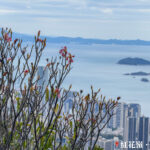
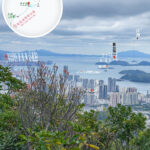
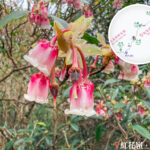
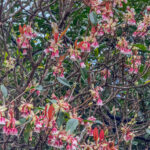
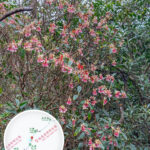
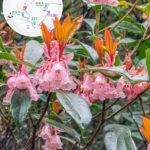
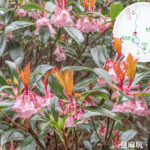
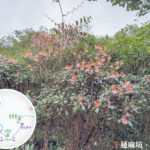
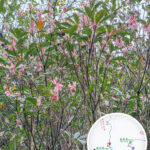
🌸 【Chinese New Year Flower】 (Bellflower / Enkianthus) is one of Hong Kong’s native flora species, named for its bell-like flower shape resembling hanging bells. It is not only a symbol of natural beauty but also carries rich cultural significance. —
🔎 Basic Characteristics
- Family & Genus: Ericaceae, Enkianthus
- Morphology: Semi-evergreen or deciduous shrub, growing about 2–3 meters tall, reaching up to 7 meters maximum
- Flowers: Formed in umbel-like corymbs, the corolla is bell-shaped and pendulous like tiny bells, with flower colors ranging from pale pink to bright red
- Leaves: Oblong or obovate-oblong, alternate, leathery, with clear veins
—
📅 Flowering and Fruiting Periods
- Flowering Period: January to March annually, coinciding with the Lunar New Year period, which earns it the name “Chinese New Year Flower”
- Fruiting Period: Around September to November; the fruit is a capsule that splits open upon maturity to disperse seeds
—
🏞️ Distribution and Habitat
- Native Range: Hong Kong, Guangdong, Guangxi, Fujian, Vietnam, and other regions
- Habitat: Prefers growing in mountain thickets or secondary forests at altitudes of 600–2,400 meters
🏞️ Popular Flower Viewing Locations in Hong Kong
- Mount Butler / Mount Violet (Violet Hill)
- Tai Chun Tsai in Sai Kung
- Kadoorie Farm and Botanic Garden
- Shing Mun Reservoir
- Luk Chuk Corridor
—
🐦 Ecological Interaction
- The nectar of the Chinese New Year Flower serves as a vital food source for the Fork-tailed Sunbird
- Sunbirds perform pollination while feeding on the nectar, helping maintain ecological balance
- The interaction between these birds and the blossoms is one of the most beautiful natural sights in Hong Kong’s hills during spring
—
⚖️ Conservation and Legislation
- Historical Background: In the past, due to being viewed as an auspicious New Year flower, it suffered from severe over-harvesting
- Current Status: Protected by law in Hong Kong since the 1930s, it is currently safeguarded under the Forestry Regulations
- Regulations: Picking, selling, or damaging the Chinese New Year Flower in the wild is strictly prohibited 🚫
—
🌺 Comparison with the “King of Bellflowers” (Rhodoleia)
Characteristics Chinese New Year Flower (Enkianthus) King of Bellflowers (Rhodoleia Championii) Flowering Period January – March February – April Height Around 2–3 meters, up to 7 meters maximum Can reach up to 10 meters Flower Color Pink to light red, flowers are small and dense Deep rose red, flowers are large Features Flowers bloom before leaves appear; petals have a translucent texture Magnificent floral shape; often easily confused with Enkianthus 📷 Viewing and Photography Tips
- Best Timeframe: Late January to late February, with sunny mornings or early afternoons offering the most beautiful light
- Shooting Angles:
- Side-backlight: Highlights the translucent quality of the petals
- Macro: Captures the intricate details of the leaf veins and corolla
- Medium-to-long telephoto lenses help avoid over-compressing the image
- Composition Suggestions: Merging the flower clusters with the background mountain scenery creates a beautiful sense of depth
—
💡 Flower Language and Culture
Flower Language: Happiness, Brightness, Vitality, Completion, Prosperity, Honesty, and Kind-heartedness —
✨ Cultural Significance:
- In olden times, it carried idioms like “When the golden bell rings, ten thousand taels of gold arrive” and symbolized “Passing imperial exams with top honors”
- In modern times, it is less commonly used as a household New Year flower because “hanging bell” (Diu Zung) sounds homophonous to “hanging the dying” (Diu Zung) in Cantonese; however, it remains a quintessential spring blossom representing Hong Kong
—