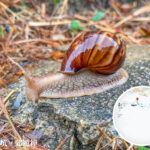
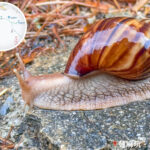
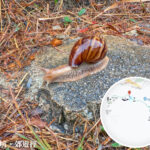
🐌 【Snails】In Hong Kong’s country parks, wetlands, and urban gardens, snails might seem like low-profile little creatures, but they actually play a massive, indispensable role in the ecosystem. They are nature’s own decomposers—by munching on dead leaves, decaying plants, and organic waste, they release vital nutrients back into the soil, keeping our forests and wetlands thriving. These slow-moving critters are essentially nature’s “street sweepers,” quietly keeping the ecological balance in check.—At the same time, snails are a major link in the local food chain. They serve as a vital energy source for birds, reptiles, and firefly larvae, making them a daily staple for many predators. Some unique species, like our local arboreal (tree-dwelling) snails, act as eco-indicators that reflect the overall health of a habitat. On the flip side, invasive species like the African Giant Snail serve as a stark reminder of how human activity can stir up the balance of nature. The presence of snails is not just a cornerstone of the natural world, but a true reflection of the delicate balance between conservation and urban development in Hong Kong.
Common Snail Species and Eco-Roles in Hong Kong
Habitat Type Common Snail Species Key Features Ecological Role New Territories Countryside Asian Tramp Snail (同型巴蝸牛) Small body size; super active during the spring and summer rainy seasons; retreats into its shell to hibernate in winter. Decomposer : Munches on dead leaves and decaying plants to boost nutrient cycles; also serves as a prime food source for birds and snakes. Arboreal Snail (樹棲蝸牛) A Hong Kong native species; can wrap its skin over its shell to camouflage itself as a slug. Habitat Indicator : Signifies a healthy, pristine woodland environment; its mucus protects its shell while providing food for small predators. Cyclophorid Snail (山蝸牛) Has an operculum (a little trapdoor lid) at the bottom of the shell to completely seal its body inside. Protector : Highly drought-resistant; helps maintain snail biodiversity in woodlands; its empty shell can become a micro-habitat. Spotted Cyclophorid Snail (斑點環口螺) Features a speckled shell; commonly found tucked away in woodland rock crevices. Decomposer : Feeds on decaying plant matter to keep woodland nutrient cycles ticking over. Chinese Round Snail (中國圓螺) Features a round, thick shell; frequently spotted in damp environments. Decomposer : A key nutrient recycler across humid woodland floors. Wetlands African Giant Snail (非洲大蝸牛) An invasive alien species; massive body size with an insanely high reproductive rate. Invader : Breeds rapidly and outcompetes local snails for resources; also ends up as a heavy food source for birds and mammals. Beautiful Vertigo Snail (麗瘤蛹螺) A tiny shelled snail commonly found hanging out in humid spots. Decomposer : Feeds on plant debris to keep the wetland ecosystem balanced. Rough Hairy Snail (多毛粗糙螺) Has a rough shell and loves damp environments. Decomposer : Breaks down dead twigs and fallen leaves in wetlands. Urban Parks African Giant Snail (非洲大蝸牛) Commonly seen crawling around flowerbeds and lawns right after a heavy downpour. Urban Adapter : Spreads rapidly across man-made environments, affecting landscape plants; also provides a steady food supply for urban birds. Helicarionid Slug (鱉甲蛞蝓) Features a vestigial (reduced) shell plate on its back; commonly found tucked away in damp corners. Prey : Hunted by birds and firefly larvae; acts as a crucial middleman link in the urban food web. Brown Cloud Agate Snail (褐雲光滑瑪瑙螺) An invasive species commonly spotted roaming around park lawns. Competitor : Poses a threat to the biodiversity of local native snails. —
The Eco-Role Wrap-up
- Decomposers : Species like the Asian Tramp Snail and Chinese Round Snail break down dead leaves and plant waste, giving the nutrient cycle a massive boost.
- Habitat Indicators : Species like the Arboreal Snail signify a healthy forest environment and carry high conservation value.
- Invaders : Species like the African Giant Snail reproduce at crazy speeds, threatening the ecological balance of local wildlife.
- Prey : Species like the Helicarionid Slug serve as a vital food source for birds and firefly larvae, keeping the food chain running smoothly.