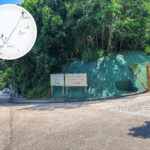
⛩️【Cham Shan Monastery (湛山寺)】 is located on the hillside of Tai Hang Hau Village on the Clear Water Bay Peninsula in Sai Kung, Hong Kong. It is a renowned practicing center for the Pure Land sect of Buddhism. The monastery was planned in 1964 by the contemporary venerable monk Master Tan Xu and his disciple Master Hui Quan, and was officially completed in the 1970s. Its name was adopted from the famous Cham Shan Temple in Qingdao, Shandong, symbolizing the southern extension of the Tiantai and Pure Land Buddhist lineages to Hong Kong. Nestled against hills and facing the ocean, Cham Shan Monastery is famous for its grand, magnificent Northern Chinese palace-style architecture and its serene, quiet environment perfect for spiritual cultivation. The monastery treasures numerous works of fine calligraphy and white marble Buddha statues. Among them, the towering “9-Story Pagoda” stands as an iconic Buddhist landmark in the Clear Water Bay area, drawing countless worshippers and visitors every Buddha’s Birthday and traditional festival to pray and cleanse their minds. —
🗺️ Geographical Highlights
The site for Cham Shan Monastery was meticulously chosen, perfectly blending the Feng Shui aesthetics of traditional Chinese architecture with the breathtaking natural scenery of Clear Water Bay:
- Backing the Hills, Facing Lung Ha Wan 🌊: Cham Shan Monastery is nestled in a mountain pass right next to Clear Water Bay Country Park. Backed by the lush hills of Tai Leng Tung, it looks out over the sweeping, magnificent waters of Lung Ha Wan and Sheung Sze Wan. This classic layout of “backing the mountains and facing the sea” gives the monastery both the grounded stability of the peaks and the open expansiveness of the ocean.
- A Hidden Pearl in a Bustling World ⛰️: Surrounded by rolling mountain ridges, the route winds down along Clear Water Bay Road beneath a dense canopy of towering trees. Viewed from above, the monastery complex is elegantly embedded within the valley, offering an exceptionally tranquil environment that feels a world away from the city—a rare, peaceful Buddhist sanctuary in modern Hong Kong.
- Connected to Nature Trails 🥾: The monastery is located close to the popular Lung Ha Wan Country Trail and Tai Hang Hau Village. Hikers wrapping up their trek—after taking in the 360-degree panoramic ocean views at the summit of Lung Ha Wan—often walk down to visit Cham Shan Monastery, experiencing a wonderful mental transition from the wild energy of nature into a space of calm, zen reflection.
—
📌 Basic Information
Item Details Name Cham Shan Monastery (湛山寺) Location 1 Tai Hang Hau Village, Clear Water Bay Peninsula, Sai Kung, New Territories, Hong Kong Founding Masters Venerable Master Tan Xu (倓虛老和尚), Master Hui Quan (慧泉法師) Year of Completion Officially completed and opened to the public in 1970 Main Structures Main Shrine Hall (Great Buddha Hall), Bhaisajyaguru (Medicine Buddha) Hall, 9-Story Pagoda, Sea-Viewing Guanyin Statue, Grand Shakyamuni Buddha Statue Opening Hours Daily from 09:00 AM to 05:00 PM (open for public sightseeing and worship) —
🏛️ Three Core Architectural Highlights & Landmarks
The buildings of Cham Shan Monastery are crafted in the Ming and Qing Northern dynasty imperial palace style, featuring vibrant red walls and brilliant yellow roof tiles that stand out wonderfully against the lush green forests:
1. Main Shrine Hall (Great Buddha Hall) ⛩️
Serving as the absolute heart of the monastery, the Main Shrine Hall is grand and imposing. It houses statues of Shakyamuni Buddha, Bhaisajyaguru (Medicine Buddha), and Amitabha Buddha, all solemnly carved from pure white marble. Hanging along both sides of the hall are numerous murals depicting Buddhist stories alongside calligraphy works by revered masters for visitors to admire.
2. 9-Story Tathagata Pagoda 🗼
This is the most striking visual landmark of Cham Shan Monastery. Towering over the hillside, this beautiful, vintage-style 9-story pagoda features a pristine white body topped with a brilliant golden roof, making it clearly visible from far away along Clear Water Bay Road or out at sea. The pagoda enshrines holy Buddha relics (Sarira) and countless small Buddha statues, symbolizing the eternal presence of the Dharma.
3. Sea-Viewing Guanyin Statue 🙏
Standing gracefully at the edge of the monastery’s most open public square is a magnificent Sea-Viewing Guanyin statue carved from white marble. The Bodhisattva of Compassion looks out with a gentle, benevolent expression over Sheung Sze Wan and the vast Pacific Ocean beyond, blessing passing vessels and local devotees alike—an absolute must-visit spot for anyone on a pilgrimage here. —
🚌 Transport Guide
To get to Cham Shan Monastery, you can hop on public transit running through the Clear Water Bay Peninsula, followed by a comfortable, short walk down a scenic country lane:
Transport Mode Details Tips & Suggestions Green Minibus 🟢 – Green Minibus 103M (Departs from MTR Tseung Kwan O Station)
– Green Minibus 103 (Departs from Kwun Tong Ferry Pier)
– Alight at the Tai Hang Hau bus stop on Clear Water Bay Road– The most recommended option
– Frequent departures
– Drops you right at the junction of Clear Water Bay Road and Tai Hang Hau RoadKowloon Motor Bus (KMB) 🚌 – KMB Route 91 (Departs from MTR Diamond Hill Station)
– Alight at the Tai Hang Hau bus stop on Clear Water Bay Road– Perfect for travelers heading out from the Kowloon urban area
– Offers a reliable and steady bus scheduleWalking Route 🚶♂️ – After getting off at the Tai Hang Hau bus stop, follow the signs and walk down Tai Hang Hau Road
– A smoothly paved, concrete downhill road nestled under pleasant green shade
– Takes about 10 to 15 minutes to reach the monastery gates– Short, easy distance
– Highly comfortable environment
– Fully suitable for families, children, and elderly travelers—