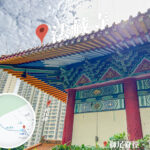
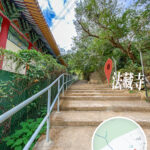
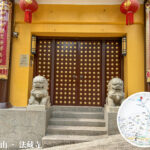
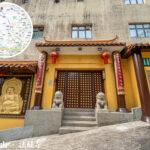
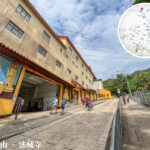
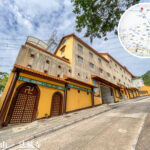
🏯 【Fat Jong Temple (法藏寺)】is a historic Buddhist monastery located along Shatin Pass Road in Tsz Wan Shan, Wong Tai Sin District, Kowloon, Hong Kong. Founded in 1948 by the Buddhist monk Venerable Yuen Juk, it was officially incorporated as a limited company in 1962. The temple was completely rebuilt in the early 1980s with funding from Mr. Kwan Yiu-cheong, and a grand consecration ceremony was held in 1995, led by Venerable Sing Yat and many high monks. Spanning an area of about 1,000 square metres, the temple features a three-hall layout facing south and built up the hillside. The main structures include the Hall of Heng and Ha, the Hall of Heavenly Kings (Wei Tuo Hall / 韋馱殿), and the Mahavira Hall, flanked by the Guanyin Hall and Sangharama Hall. With its striking red columns, white walls, and yellow glazed-tile roofs with flying eaves, the whole complex feels incredibly peaceful and solemn. —
📌 Basic Information
Category Detailed Info 🏯 Temple Name Fat Jong Temple (法藏寺) 📍 Address 175 Shatin Pass Road, Tsz Wan Shan, Wong Tai Sin District, Kowloon, Hong Kong 🗺️ Location Nestled at the eastern foothills of Lion Rock (獅子山), right next to the residential area of Tsz Wan Shan—super easy to get to, yet hidden away in total peace. 🧘♂️ Religion Mahayana Buddhism (Chinese Tradition / 大乘佛教漢傳系統) 🕰️ Founded In 1948, established by the Grand Master Venerable Ho Ching. 🛕 Rebuilding & Consecration Rebuilt in the 1980s with funding from Mr. Kwan Yiu-cheong, and reconsecrated in 1995. 🏗️ Architecture Three-hall courtyard layout: Hall of Heng and Ha → Hall of Heavenly Kings & Wei Tuo Hall → Mahavira Hall, flanked by the Guanyin Hall and Sangharama Hall. 🙏 Main Deities Enshrined The Trikala Buddhas (Three Treasure Buddhas), Manjusri Bodhisattva, Samantabhadra Bodhisattva, and the Eighteen Arhats. 🌸 Guanyin Hall Features Enshrines the Thousand-Hand Thousand-Eye Avalokiteshvara (Guanyin) with a super serene and compassionate look. 🛡️ Sangharama Hall Features Enshrines the Sangharama Bodhisattva depicted in the fierce, majestic image of Lord Guan (Guan Yu). 🔥 Incense & Offerings Being so close to town, the temple stays packed with worshippers and the incense is always burning bright. 📆 Dharma Assemblies & Events Regularly hosts Buddhist events, chanting sessions, and meditation workshops. 🚗 Getting There Take the MTR to Diamond Hill or Wong Tai Sin Station, then catch a minibus or bus straight up to Shatin Pass Road in Tsz Wan Shan. 📐 Total Area Around 1,000 square metres 🎬 Fun Fact It was used as a filming location for the classic Shaw Brothers movie “The Four Girls Who Commuted Suicide”. —
🚇 Transport & Nearby Attractions
- 🚉 Nearest MTR Stations: Switch to a minibus from Wong Tai Sin Station or Diamond Hill Station.
- 🏞 Nearby Spots: Wong Tai Sin Temple, Chi Lin Nunnery, and Nan Lian Garden.
- 🚶♀️ Hiking Start Point: Fat Jong Temple is a major launching pad for heading up Tsz Wan Shan. The stretch of Shatin Pass Road near Shatin Pass Village is the go-to starting point for the Lion Rock Nature Trail.
—
📜 Origin of the Name & Sect Background
- “Fat Jong” (Dharma Treasury) comes from the Infinite Life Sutra: “The Dharma treasury contains boundless virtues”, meaning the Buddha’s teachings are infinitely profound.
- It’s also a nod to the legendary Tang Dynasty monk “Master Fat Jong”, the third patriarch of the Huayan school, who was highly revered by Empress Wu Zetian.
- The temple belongs to Mahayana Buddhism, spreading Huayan teachings and the vision of universal salvation.
— The statues enshrined inside Fat Jong Temple are grand and majestic. Massive figures of the Two Generals, Heng and Ha, guard the gate hall; the Hall of Heavenly Kings (Wei Tuo Hall / 韋馱殿) houses the Maitreya Buddha, Wei Tuo Bodhisattva, and the Four Heavenly Kings. The Mahavira Hall serves as the main sanctuary, enshrining Gautama Buddha, Medicine Buddha, and Amitabha Buddha (collectively known as the Trikala Buddhas / 三寶佛), flanked by Manjusri and Samantabhadra Bodhisattvas, with the Eighteen Arhats lining the sides. Worshippers can also head to the Guanyin Hall to pray to the Thousand-Hand Thousand-Eye Avalokiteshvara, or visit the Sangharama Hall to see the imposing Sangharama Bodhisattva in the form of Lord Guan. The temple’s name “Fat Jong” is taken from the scriptures meaning “entering the treasury of Dharma”, showing that Buddhism holds endless truths, while also honoring Master Fat Jong (the Third Patriarch of Huayan) from the Tang Dynasty. —
🏛 Architecture & Hall Layouts
Fat Jong Temple uses a three-hall layout, facing south and built along the slopes of the hill, creating a beautifully solemn vibe:
Hall Name Chinese Name Deities & Key Features Hall of Heng and Ha 哼哈殿 The Two Generals Heng and Ha, guarding the temple entrance with 10-foot-tall statues. Hall of Heavenly Kings 天王殿 Maitreya Buddha, Wei Tuo Bodhisattva, and the Four Heavenly Kings. Mahavira Hall 大雄寶殿 Gautama Buddha, Medicine Buddha, Amitabha Buddha, Manjusri, Samantabhadra, and the Eighteen Arhats. Guanyin Hall 觀音殿 The Thousand-Hand Thousand-Eye Avalokiteshvara with a beautifully peaceful face. Sangharama Hall 伽藍殿 Sangharama Bodhisattva, enshrined in the powerful and fierce image of Lord Guan. Merit Hall 功德堂 Houses ancestral tablets for families to honor their ancestors and hold memorial rituals. Monastic Kitchen 香積廚 Famous for its exquisite and delicious Buddhist vegetarian food, which is a massive hit with worshippers. — Fat Jong Temple is right in town, making it incredibly easy to get to and always bustling with incense and worshippers. It’s not just a religious spot for prayers and blessings—hosting major Dharma assemblies every year—but it also provides vegetarian meals, memorial rituals, and ancestral and columbarium niches. The temple is open daily from 9:30 AM to 4:00 PM, which is super convenient for a quick trip from town. On top of that, its unique location makes it the exact dividing point where Shatin Pass Road switches between one-way and two-way traffic. Its grand architecture and peaceful vibe have even caught the eye of filmmakers, serving as a backdrop for Shaw Brothers movies like “The Four Girls Who Commuted Suicide”, making it a fascinating blend of faith, culture, and history. —
🪷 Religious Activities & Cultural Rituals
The temple stays busy all year round, hosting several key Buddhist festivals and rituals:
- 🛁 Buddha Bathing Festival: Held on the 8th day of the 4th lunar month to celebrate the birth of Gautama Buddha.
- 🧹 Ching Ming Dharma Assembly: A time for honoring ancestors and performing rituals for the departed.
- 👻 Yu Lan Dharma Assembly: Held in the 7th lunar month for universal salvation and offering blessings to wandering souls.
- 🧘♂️ Meditation Activities: Provides a quiet space for visitors to practice mindfulness and find their inner peace.
- 🥬 Vegetarian Culture: The monastic kitchen serves up amazing veggie dishes to promote compassionate eating.
—
🖼 Architecture & Artistic Highlights
- 🏮 Red pillars, white walls, and yellow-glazed tiled roofs with flying eaves—classic Chinese temple style all the way.
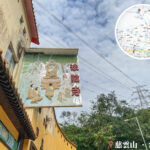
- 🎨 Buddhist Relief Murals: The entrance features a lifelike mural showing the Buddha preaching to his five disciples listening intently.
- 🪑 Long Corridor Design: The walkway leading from the main gate to the halls builds up a beautifully solemn transition for worshippers stepping inside.
—