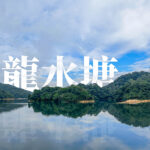
💧 【Kowloon Reservoir (九龍水塘)】 is one of the earliest completed waterworks engineering projects in Hong Kong. Located within Kam Shan Country Park in the Sha Tin District of the New Territories, it was officially commissioned in 1910. The complex comprises the main reservoir, a bywash reservoir, and a reception reservoir that intercepts mountain streams along Tai Po Road. With an initial capacity reaching 3 billion gallons, it significantly alleviated the acute water shortages plaguing the Kowloon Peninsula at the time. Its iconic curved gravity dam, constructed from granite blocks, remains fully operational today. In 2009, five of its historic structures were declared statutory monuments of Hong Kong, standing as a testament to the achievements of early hydraulic engineering.
📌 Key Information
Item Details 📍 Name Kowloon Reservoir 🗓️ Year of Completion 1910 🧱 Architectural Features Unique curved main dam design; designated as a statutory monument 🏞 District Sha Tin District, New Territories (located within Kam Shan Country Park) 🌊 Storage Capacity Approximately 1.578 million cubic metres 🗺️ Geographical Coordinates 22°21′14″N 114°09′12″E 🧭 Nearby Landmarks Kam Shan (Golden Hill), Beacon Hill, Needle Hill 🚶♂️ Pedestrian Paths & Trails Golden Hill Road, MacLehose Trail Section 6, Wilson Trail Section 6, Kam Shan Tree Walk 🐒 Special Ecology Rhesus macaques were historically introduced to control the spread of the toxic Strychnos axillaris plants 🏛️ Historic Status The fourth reservoir built in Hong Kong; five associated structures were declared Statutory Monuments in 2009 🧭 Reservoir Cluster Comprises Kowloon Reservoir, Kowloon Bywash Reservoir, Kowloon Reception Reservoir, and Shek Lei Pui Reservoir 🚰 Function Supplies fresh potable water to the Kowloon Peninsula, replacing traditional wells and underground water sources — The surrounding area seamlessly blends natural ecology with cultural heritage. Nurtured by the lush woodlands around the reservoir cluster, Kam Shan Country Park has become the most densely populated habitat for macaques in Hong Kong, and visitors frequently spot monkey troops along the roadsides and dam crests. Furthermore, the remnants of the wartime Jubilee Battery and the path of MacLehose Trail Section 6 traverse the landscape, anchoring both ecological conservation and historical memory in one space. Facilities like the reservoir jogging trail and designated barbecue areas also make this a highly popular choice for weekend leisure. —
📜 Historical Background & Development
- 🕰️ Construction Era: Construction commenced in 1901 and concluded in 1910. It is the fourth reservoir built in Hong Kong and the very first located in the New Territories.
- 📈 Reason for Construction: In response to a surging population across the Kowloon Peninsula, existing wells and pumping stations fell short of demand, prompting the government to construct a reservoir system to store rainwater.
- 🏛️ Water Supply Revolution: The Kowloon Reservoir served as the source for the “Kowloon Gravity Fed Water Supply System,” marking a major milestone in Hong Kong’s water engineering history.
- 🏗️ Subsequent Expansions:
- In 1922, the dam was raised to 100 feet, expanding storage capacity by 1.5 million gallons.
- In 1926, the Kowloon Reception Reservoir (historically known as Eption Pond) was completed.
- In 1931, the Kowloon Bywash Reservoir (commonly called the New Pond) was commissioned.
—
🧱 Architectural Features & Statutory Monuments
Five structures within the Kowloon Reservoir cluster were designated as Statutory Monuments of Hong Kong in 2009:
Monument Name Year of Completion Function & Characteristics Main Dam 1901–1910 An iconic, gracefully curved masonry structure. Main Dam Valve House 1901–1910 Regulates water flow and channels supply downstream. Spillway Dam 1901–1910 An overflow facility designed to safely discharge surplus water. Spillway Dam Recorder House 1901–1910 Monitors water levels and discharge flow rates. Recorder House 1901–1910 Houses hydrological telemetry equipment and records. A historical curiosity: Rhesus macaques were deliberately introduced to the surrounding woodlands to forage on the fruits of the toxic Strychnos axillaris vine, inadvertently giving rise to the reservoir’s famous wildlife spectacle.
—
💧 Structure & Capacity of the Kowloon Reservoir Cluster
Reservoir Name Year of Completion Storage Capacity (Million m³) Main Dam Length / Height (m) Kowloon Reservoir 1910 1.578 182.9 / 33.2 Kowloon Bywash Reservoir 1931 0.800 106.0 / 41.1 Kowloon Reception Reservoir 1926 0.121 70.1 / 13.0 Shek Lei Pui Reservoir 1925 0.374 83.5 / 22.3
- 🌧️ As Kowloon Reservoir sits at the highest elevation, rainwater initially fills the main reservoir before being managed and channeled down to the bywash and reception reservoirs.
- 🔧 In 2019, the Drainage Services Department initiated the construction of a 2.8 km water tunnel linking the Bywash Reservoir to the Lower Shing Mun Reservoir to curb overflow issues during heavy rainstorms.
—
💧 Modern Functions & Flood Mitigation Engineering
Due to the modest storage limits of the Kowloon Reservoir cluster, heavy downpours historically caused frequent overflows, resulting in localized flooding in Cheung Sha Wan. To address this, the government executed a major infrastructural intervention:
🛠️ 2019 Inter-Reservoir Transfer Scheme
- The project involved boring a 2.8 km long water tunnel with a 3-metre diameter.
- By connecting the Kowloon Bywash Reservoir to the Lower Shing Mun Reservoir, it successfully minimizes overflow spills while boosting overall water harvest.
- The total engineering cost reached approximately HK$1.22 billion, with construction wrapping up in 2022.
- The system yields an additional 3.4 million cubic metres of local rainwater collection annually.
—
🥾 Hiking Routes & Transport Information
📍 Recommended Route: Kam Shan Country Park Loop
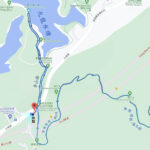
Item Details 🚩 Starting Point Shek Lei Pui Reservoir Bus Stop (Tai Po Road) 🗺️ Itinerary Shek Lei Pui Reservoir → Kowloon Bywash Reservoir → Kowloon Reception Reservoir → Kowloon Reservoir → Return to start 📏 Distance Approximately 5.5 km ⏱️ Time Required Approximately 2 to 2.5 hours 💪 Difficulty ⭐⭐☆☆☆ (Perfect for beginners) 📸 Highlights Historic masonry dams, the spillway cascade, bamboo tunnels, lakeside vistas, heritage plaques, and 🐒 macaque observation points — For transportation, hikers can board KMB bus routes 72 or 81 from Sham Shui Po or Wong Tai Sin and alight directly at the Golden Hill Road stop. Kowloon Reservoir stands not only as a living museum of Hong Kong’s utility history but also as an open-air classroom right on the city’s edge—showcasing a unique ecosystem where humans, wildlife, and heritage thrive side by side. —
🚍 Transportation Access
Route Termini Bus Route Alighting Stop Sha Tin (Wo Che) 🔁 Jordan (West Kowloon Station) KMB Route 81 Shek Lei Pui Reservoir Stop Cheung Sha Wan 🔁 Tai Po (Tai Wo) KMB Route 72 Shek Lei Pui Reservoir Stop —
📸 Recommended Photo Hotspots
- 🧱 Kowloon Bywash Reservoir Dam: A grand, classically designed stone-faced masonry structure
- 🌿 Kam Shan Tree Walk: Showcases excellent botanical diversity, making it a favorite for nature lovers
- 🐒 Monkey Viewing Spots: Troops are frequently seen hanging along the dam railings, adding unique character to the walk
- 🌊 The Spillway: During the wet season, overflowing water cascades down majestically like a natural waterfall
—
🌳 Natural Environment & Trail Networks
Located inside Kam Shan Country Park, the reservoir cluster offers tranquil surroundings and a wealth of local wildlife, making it an ideal destination for family outings, outdoor photography, and birdwatching.
🚶♂️ Alternative Paths
- Kam Shan Tree Walk: Lined with educational plaques detailing local flora, perfect for a leisurely family walk.
- MacLehose Trail Section 6: Traverses right through the heart of the reservoir basin, offering spectacular vantage points.
- Shek Lei Pui Jogging Trail: A level, well-paved, and comfortable path suited for all fitness levels.
—