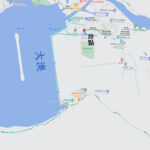
🧂 【Yim Tin Pok (鹽田壆)】 is one of Hong Kong’s most iconic salt-making heritage sites. Geographically located in Tai O at the northwestern tip of Lantau Island, it stands as a historic monument witnessing the rise and fall of Hong Kong’s salt industry. This embankment was originally built during the Qianlong reign of the Qing Dynasty to fend off tides and protect the salt pans, converting a wide open bay into a narrow, long channel and clearing up huge swathes of land for salt production. Back in the day, Tai O‘s salt pans took up two-thirds of the entire area. The salt industry was booming, with boats constantly coming and going, and local salt products exported all the way to Mainland China, making Tai O a bustling community built equally on fishing and salt.
📌 Quick Info
Category Details 📍 Location Tai O Fishing Village, Northwest Lantau Island 🏗️ Embankment Engineering During the Qianlong reign of the Qing Dynasty (1736–1796), the government built the “Salt Embankment” to transform the bay into a narrow canal, creating massive salt pans. 🗺️ Landscape Evolution In the old days, salt pans were spread across areas near the foot of North Hill (near Yeung Hau Temple), Lung Tin Estate, and Buddhist Fat Ho Memorial College. After the salt industry declined in the 1960s, the salt pans were gradually abandoned. Since the 1980s, the Yim Tin Pok area has become overgrown with Mangrove Forests, turning into a wetland ecological zone. 🌿 Natural Transformation Today, Yim Tin Pok serves as the foundation for the Mangrove Wetlands, providing a crucial habitat for waterbirds, fish, shrimps, and crabs. — With the turn of the era, the salt industry gradually faded out in the 1960s. Once the salt fields were abandoned, the Yim Tin Pok area was slowly taken over by mangrove forests, evolving into the wetland eco-zone we see today. It not only preserves parts of the embankment ruins as a historical testament, but also nurtures a diverse range of birds and marine life, holding immense cultural and ecological value. Nowadays, Yim Tin Pok is both a key highlight for Tai O guided tours and a perfect starting point for visitors to learn about Hong Kong’s salt history and wetland ecology. —
—
🧂 History of the Salt Industry
- Origins: Records of Hong Kong’s salt industry date back to the Song Dynasties. Tai O became a major salt production hub thanks to its ideal geography for sun-drying salt. During the Qianlong reign of the Qing Dynasty (around the mid-18th century), officials built embankments in Tai O, Northwest Lantau Island, reclaiming land from the sea to scale up the salt business.
- Peak Era: Around 1900 up until World War II, Tai O’s salt industry hit its peak:
- The salt pans took up half of Tai O’s urban area.
- Annual production reached over 300,000 piculs.
- Over a hundred salt workers were employed, with boats constantly filtering in and out, exporting salt to the Mainland.
- The total area of salt fields once made up two-thirds of Tai O.
- Salt workers settled around Yim Tin Pok, forming a tight-knit community.
- The blending of the salt and fishing industries gave rise to Tai O’s signature local delicacies: Salted Fish and Shrimp Paste.
- Decline: In the 1950s and 1960s, due to cheap imported salt and industrialization, the local salt industry gradually collapsed. The salt pans were later repurposed into fish ponds, farmland, or redeveloped for housing.
—
🏘️ Social & Cultural Impact
- Street Development:
- The northern side of the embankment gradually evolved into Tai Ping Street and Wing On Street, becoming the commercial heart of the town.
- The eastern embankment used to be a major residential hub for salt workers.
- Local Specialities: The salt industry directly fueled the production of local delicacies like Salted Fish and Shrimp Paste. The traditional craftsmanship of making these treats has been listed as part of Hong Kong’s Intangible Cultural Heritage.
- Settlement Impact: The parallel growth of salt production and fishing shaped Tai O into a unique community sustained by both trades.
—
🌿 Current Status & Conservation
- Historic Ruins: Sections of the embankments are still visible today, serving as a living historical testament.
- Mangrove Ecology:
- They form a natural breakwater that protects the local village.
- The area is a habitat for birds like Egrets and the endangered Black-faced Spoonbills.
- Cultural Tourism:
- Guided tours are regularly organized to introduce visitors to the history of salt making and wetland ecology.
- It has become a core part of Tai O’s cultural tourism.
—
🗂️ Major Locations & Distribution
Category Details 🛡️ Yim Tin Pok (Salt Pans Embankment) Built to block tides and protect the salt fields. Parts of it are preserved today as a historical heritage site. 🧂 Salt Fields Used for producing sea salt to cure and preserve fish catches. Turned into mangroves after being abandoned. 🏘️ Tai Ping Street, Wing On Street The former trading hub for the salt industry, now serving as the main streets of Tai O. 🌿 Mangrove Wetlands A high-conservation-value wetland eco-zone, nurturing a diverse array of bird and aquatic species. ⛩️ Pak Shan Kok Located near the Yeung Hau Temple; one of the main areas where salt fields were clustered back in the day. 🏠 Lung Tin Estate Part of the old salt fields footprint, later redeveloped into a residential estate. 💧 Po Chue Tam Once part of the Tai O salt pan district, now mostly consisting of wetlands or fish ponds. 👥 San Ki Village A settlement where salt workers and fishermen lived, deeply tied to the growth of the salt trade. 🌊 Hang Mei Creek A stream area that once supplied water to the salt fields, now a natural ecological zone. 🌱 Nam Chung A former salt field distribution area, now largely transformed into mangroves and wetlands. —
🌿 Summary
Yim Tin Pok is where Tai O’s culture and nature cross paths:
- Cultural Aspect: It witnessed the rise and fall of Hong Kong’s salt trade, shaping Tai O’s community and its famous local products.
- Natural Aspect: After the salt fields were abandoned, they naturally transformed into lush mangroves, becoming a major focus for local eco-conservation.
- Tourism Aspect: Today, it stands as a prime asset for cultural tourism and ecological education.