🚇 【Fanling】 stands as the cultural heart of the North District. Together with Sheung Shui, Ta Kwu Ling, and Sha Tau Kok, it forms the combined sub-region colloquially known as “Sheung-Fan-Sha-Ta”. With a history dating back to the Qing Dynasty, Fanling was once a fertile basin of farmlands and villages. Following its development as a New Town, the neighborhood now seamlessly blends modern urban planning with traditional rural charm. The local landscape features a unique contrast between contemporary public housing estates like Wah Ming Estate and historic walled villages like Fanling Wai, which preserves the deep-rooted Weitou culture. In terms of connectivity, Fanling MTR Station serves as a vital transport hub on the East Rail Line, linking local residents to Lo Wu, Sheung Shui, and the urban core, while a comprehensive bus network blankets the rest of the New Territories for hassle-free commuting. —
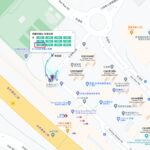
🗺 Geographical Location
- Located in the northeast of the New Territories, neighboring Sheung Shui, Sha Tau Kok, and Ta Kwu Ling.
- Major transportation channels include:
- Fanling MTR Station
- Fanling Highway
—
📜 History & Origin of the Name
- Origin of the Name: Fanling was originally named “Fan Pik Leng” (Flour-wall Ridge) because its mountain cliffs were as stark white as flour. The name later evolved into “Ling Shan” (Spiritual Hill) before finally becoming “Fanling”.
- Early Development: At the end of the Southern Song Dynasty, the Pang clan settled here and established Fanling Wai. The “Fan Pik Leng” name was officially documented back in the Qing Dynasty’s Xin’an County Gazetteer.
- British Colonial Era: The area was leased to Britain in 1898 under the Convention for the Extension of Hong Kong Territory. In 1910, the Kowloon-Canton Railway (KCR) opened, and Fanling Station was established.
- Rural Committee: The Fanling Rural Committee was set up in 1954 to manage 29 villages alongside Luen Wo Hui.
—
🚉 Transport & Connectivity
- Fanling MTR Station: Situated on the East Rail Line, offering a direct link between the urban areas and the northern New Territories.
- Bus & Minibus Network: Highly accessible routes heading towards Ta Kwu Ling, Sha Tau Kok, Tai Po, and beyond.
- Historical Transport: A narrow-gauge railway line once ran all the way to Sha Tau Kok starting in 1912, though it ceased operations in 1928.
—
🏯 Clan Culture & Heritage Sites
Name English Name Key Highlights 龍躍頭文物徑 Lung Yeuk Tau Heritage Trail Connects the traditional “Five Walled Villages and Six Villages”, showcasing the rich history of the Tang clan. 粉嶺圍 Fanling Wai The ancestral home of the Pang clan, beautifully preserving its historic walls and architectural relics. 善述書室 Shan Shue Study Hall Built back in 1840, this historic study hall is classified as a Grade 1 Historic Building. 石廬 Shek Lo A unique Grade 1 Historic Building blending traditional Chinese and Western architectural styles. 天后宮 Tin Hau Temple Dedicated to the Goddess of the Sea, traditionally protecting local fishermen and mariners. — Fanling is much more than just a quiet residential suburb; it is home to an abundance of natural and cultural treasures. The nearby Pat Sin Leng Country Park and Hok Tau Reservoir serve as popular hotspots for hiking and camping, while the Lung Yeuk Tau Heritage Trail links together stunning historic structures like the Tang Chung Ling Ancestral Hall and the Lo Wai entrance gate tower, offering a deep dive into local lineage culture. In recent years, Fanling has undergone further transformation with major new developments like Queen’s Hill Estate and the Science Park expansion. Despite this urban growth, nearby eco-conservation areas like the Long Valley Wetlands continue to preserve the area’s ecological balance, keeping Fanling as one of the few diverse communities in Hong Kong that masterfully balances urban vitality, historical depth, and pristine natural spaces. —
🏘 Village Culture
- Lung Yeuk Tau: Home to the iconic “Five Walled Villages and Six Villages”, showcasing magnificent traditional walled architectural clusters.
- Fanling Wai: An ancient walled village featuring a classic, scenic Feng Shui Pond right at its entrance.
- On Lok Tsuen: Originally a prestigious villa neighborhood for wealthy residents, it has since been rezoned into a bustling industrial estate.
—
🛕 Religious & Military Architecture
- Pang Ying Ching Uk: A renowned Taoist temple complex displaying exquisite Taoist philosophy and classical garden aesthetics.
- St. Joseph’s Church: A long-standing Catholic parish serving the local community.
- Chong Har Ching She: A serene Buddhist monastery dedicating altars to Kwun Yam, Lui Dong Bin, and the Three Pure Ones, seamlessly blending Confucian, Buddhist, and Taoist beliefs.
- Fanling Barracks: Formerly a major base for the British Forces, it is now occupied and maintained by the PLA Hong Kong Garrison.
—
🏞 Natural & Leisure Attractions
Attraction Key Highlights Lau Shui Heung Reservoir Famous for its glass-like water reflections, earning it the nickname “Mirror of the Sky”. It is an absolute favorite for photographers, especially during the stunning autumn foliage season. Ping Yeung Mural Village A hidden gem featuring vibrant, colorful murals and quirky street art installations. Wun Chuen Sin Koon A beautiful classical Chinese garden complex widely celebrated for its spectacular annual lotus and chrysanthemum exhibitions. Luk Keng to Kuk Po Trail An easy, beginner-friendly hiking trail boasting breathtaking views of golden reed fields along the coast. —
🍽️ Fanling Foodie Map
Eatery Must-Try Food Location CoHee Café “Bao Ching Tin” (Black sesame Basque cheesecake), “I Am Innocent” (Chocolate frappe) Former Fanling Magistracy Kwan Kee Beef Balls & Pork Knuckles Handmade beef balls, iconic braised pork knuckles Luen Wo Hui Four-Eyed Boy Rice Noodle Rolls Classic rice noodle rolls (cheong fun), siu mai, fish balls Wo Lung Street Wan Chun Delicacies Deep-fried sushi, chicken wing rice rolls Wo Lung Street —
🏘️ Community & New Town Development
- Luen Wo Market (Luen Wo Hui): Established in 1949, it was once the commercial heart of the North District, complete with its open-air market, cinema, local bars, and dance halls.
- On Lok Village (On Lok Tsuen): Founded in 1915 by businessman Fung Kang-hoo, it was originally a scenic residential area for scholars and the elite before being redeveloped into an industrial zone.
- Fanling/Sheung Shui New Town: Urban planning kicked off in the late 1970s; today, the combined new town area is home to a population of over 260,000 residents.
—