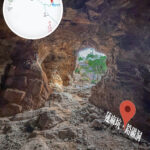
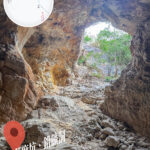
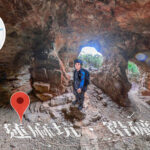
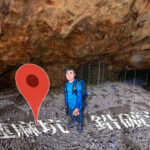
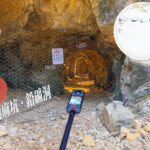
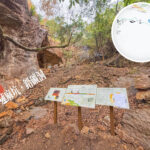
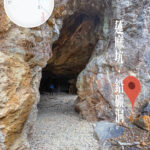
🏭 【Lin Ma Hang Mine(蓮麻坑 礦場)】 located in Robin’s Nest Country Park, Sha Tau Kok within the North District of the New Territories, is one of the largest lead mines in Hong Kong’s history. While it is famously known for its tungsten extraction, the mine provided crucial industrial resources for Hong Kong during the mid-20th century, securing a prominent spot in international markets. Built along the rugged hillside, the mine’s surroundings feature winding mountain paths interwoven with local villages, creating a distinctive landscape and cultural heritage. Today, although all mining activities have long ground to a halt, the abandoned mine caves, stone walls, and industrial ruins still silently tell the tale of its glorious past.
📌 Fast Facts
Category Information Details 📍 Location North District, New Territories, nestled between Sha Tau Kok and Ta Kwu Ling, inside Robin’s Nest Country Park ⛏️ Main Minerals Galena (lead ore), accompanied by sphalerite and traces of silver 📜 Mining History ⏳ Sporadic mining operations began in the late 19th century. 📑 The British Hong Kong government issued a mining lease in 1925, driving the mine into its golden age during the 1930s. 👷 Between 1936 and 1939, the workforce reached up to 2,000 workers, making it the largest lead mine in Hong Kong. ⚔️ It was occupied by the Japanese army during World War II, and eventually ceased operations in the late 1950s due to falling international lead prices and labor strikes. 🏚️ Heritage Features Preserves numerous mine caves, stone walls, and ruined industrial facilities, complete with information panels. Selected mine caves have been structurally reinforced for safe public viewing 🦇 Ecological Value Since its abandonment, the mine caves have become a vital bat sanctuary, housing 10 bat species including the Schreibers’ Long-fingered Bat and the Great Roundleaf Bat 🌱 Conservation Status Designated as a Site of Special Scientific Interest (SSSI) —
🏭 Mining History
Category Information Details ⏳ Mining Era Minor mining activities emerged in the late 19th century, with official mining leases granted by the British Hong Kong government in 1925 🌟 The Heyday During the 1930s, the workforce peaked at over 2,000 people, focusing primarily on extracting galena alongside sphalerite and silver ⚔️ Reasons for Decline Japanese occupation during WWII, plummeting global lead prices, labor strikes, and natural disasters 🛑 Closure Time Operations ground to a complete halt in the late 1950s, leaving the site to be gradually reclaimed by nature — Beyond its industrial history, 【Lin Ma Hang Mine】carries immense cultural and ecological weight. The local village lifestyle used to be tightly bound to the mining industry; generations of villagers relied on the mine for their livelihoods, leaving behind a treasure trove of social memories. In recent years, the ruins have become a red-hot hotspot for exploring Hong Kong’s industrial heritage, drawing hikers and history buffs keen to retrace the steps of the old miners. Stepping onto this land not only gives you a sneak peek into Hong Kong’s early industrialization but also lets you soak up a slice of history frozen in time where nature meets heritage. —
🌿 Ecology & Conservation
Category Information Details 🦇 Bat Sanctuary The abandoned shafts transformed into a major breeding ground for bats, with 10 species recorded, accounting for about 40% of Hong Kong’s total bat population 🛡️ Protection Status Designated as a 『Site of Special Scientific Interest』 (SSSI) in 1994 🏛️ Revitalization Works Structural reinforcement and facility upgrades were completed in late 2024; it now operates as an open-air museum fitted with information boards and guided tour services —
📍 Key Attractions
- Lin Ma Hang Mine Caves:The crown jewel of the site, commonly dubbed the 『Grand Hall』, which is the No. 6 Mine Cave.
- MacIntosh Forts:Military observation posts set up after WWII to keep an eye out for illegal immigrants.
- Hung Fa Chai Viewing Deck:Offers a sweeping panoramic view over Sha Tau Kok Sea and the border landscape.
—
🚶♂️ Hiking Briefing Table
Category Information Details 📏 Total Distance Approx. 8.3 km ⏱️ Time Required 2.5–3.5 hours ⛰️ Elevation Gain Approx. 200 m 🪜 Step Count Approx. 900 steps 💪 Difficulty Intermediate 🥤 Replenishment No stores or restaurants along the way; must pack your own food and water 🔄 Bail-out Point Retrace your steps from the mine caves 🚻 Toilets Lin Ma Hang Village Playground, Wo Keng Shan Public Toilet —
🚌 Transport & Route Guide
- Starting Point:Set off from MTR Sheung Shui Station.
- Transport Link:Hop on the Green Minibus 59K, which takes around 30 minutes to reach Lin Ma Hang Village.
- Walking Distance:After getting off the bus, hike along the Lin Ma Hang Country Trail for about 45 minutes, tackling a 200m elevation gain and roughly 900 steps to finally reach the mine caves.
- Pro-tips:There are zero shops or kiosks along the trail, so make sure to pack enough food and water; certain stretches are quite steep, so wearing a proper pair of hiking shoes is highly recommended.