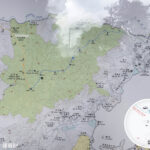
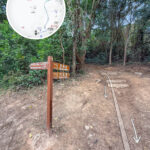
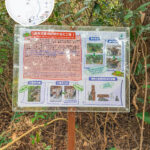
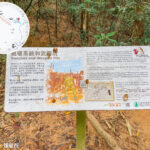
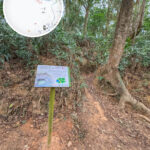
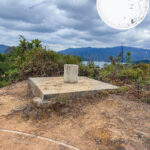
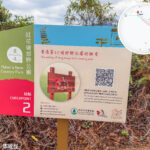
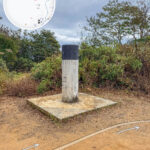
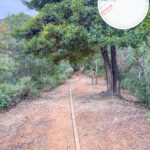
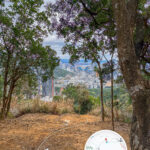
🌸【Robin’s Nest • Country Park (紅花嶺 • 郊野公園)】 is Hong Kong’s 25th country park, officially established on 1 March 2024. Situated in Sha Tau Kok along the northeastern border of the New Territories, it covers an area of approximately 530 hectares. The park connects with the mountain ranges of the Wutong Mountain Scenery Area in Shenzhen to the north and lies adjacent to Pat Sin Leng Country Park to the south, creating a crucial ecological corridor between Hong Kong and Shenzhen. Having been managed as part of the Frontier Closed Area for a long period, it has experienced relatively little human disturbance. This has preserved a rich collection of plant and animal resources—including the rare upland bird species, the Chinese Grassbird, as well as native plants such as the Hong Kong Pavetta and Bellflower (Enkianthus)—giving it exceptionally high ecological value. —
📌 Fast Facts
Item Details 🏞️ Park Name Robin’s Nest Country Park 📍 Location Sha Tau Kok, Northeastern New Territories, Hong Kong; borders Wutong Mountain in Shenzhen to the north and stands adjacent to Pat Sin Leng Country Park to the south 📅 Date Established 1 March 2024 (Hong Kong’s 25th country park) 📐 Area Approx. 530 hectares 🗻 Topography Rolling ridges, natural streams, secondary forests, and highland grasslands; connects with Wutong Mountain (Shenzhen) to form a cross-boundary ecological corridor 🌿 Ecological Value Home to species of high conservation value, such as the Red Azalea, Chinese Grassbird, Greater Bent-winged Bat, and Incense Tree 🦇 SSSI Status Lin Ma Hang Lead Mine: A key bat habitat, designated as a Site of Special Scientific Interest (SSSI) in 1994 🏰 Historical Relics MacIntosh Forts, machine gun pillboxes, and the Lin Ma Hang mining system 🥾 Hiking Trails Robin’s Nest Country Trail and Lin Ma Hang Trail; the routes span about 7.5 km in total and take around 4–5 hours Bridge Ecological Corridor Linked to Wutong Mountain in Shenzhen to form a cross-boundary ecological pathway 🧭 Elevation The main peak reaches 492 metres above sea level, making it one of the highest peaks in North District, New Territories 🚌 Transport Links Take KMB Bus 78K or green minibus 59K to Tan Shui Hang or Lin Ma Hang Village 🏡 Nearby Village Lin Ma Hang Village: A 300-year-old village that was historically centered on agriculture 🌸 Seasonal Views Red Azaleas bloom in full glory during spring; silvergrass sways gently throughout winter 🔬 Conservation Habitat management, education, and regulatory measures enforced by the AFCD — The park is deeply steeped in history and cultural heritage. It houses one of the most extensive mining networks in Hong Kong’s history—the Lin Ma Hang Lead Mine (with a history of extraction dating back to the 1860s)—which was designated as a Site of Special Scientific Interest (SSSI) in 1994 and serves as one of Hong Kong’s most vital bat habitats. Visitors can also spot World War II-era Japanese machine gun pillboxes and trenches, alongside the MacIntosh Forts built between 1949 and 1953 to strengthen border security, which were classified as Grade II historic buildings in 2009. Furthermore, the 300-year-old Hakka settlement of Lin Ma Hang Village stands as a living testament to the area’s rich human history. —
🚶♀️ Hiking Trails
Robin’s Nest features two primary country trails tailored for intermediate hikers:
1️⃣ Robin’s Nest Country Trail
- Starting Point: Tan Shui Hang
- Ending Point: Hung Fa Chai Viewing Point
- Length: Approx. 4 km
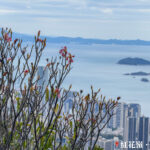
- Highlights: Offers sweeping views over the Starling Inlet (Sha Tau Kok Sea) and Yantian in Shenzhen
2️⃣ Lin Ma Hang Trail
- Starting Point: Lin Ma Hang Village
- Ending Point: Robin’s Nest Ridge
- Length: Approx. 3 km
- Highlights: Winds past historical mines and fort structures, offering a culturally rich experience
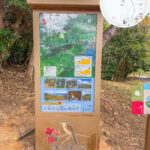
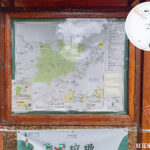
— Robin’s Nest Country Park provides visitors with two main hiking paths: the Robin’s Nest Country Trail and the Lin Ma Hang Trail. With dedicated viewing platforms along the way, hikers can take in the serene scenery of Starling Inlet, Luk Keng, and Nam Chung, as well as the majestic silhouette of Wutong Mountain in Shenzhen. In spring, the hillsides are blanketed with blooming Red Azaleas (Rhododendron simsii); in winter, the swaying silvergrass transforms the landscape into a peaceful retreat. It is worth noting that there are no replenishment options or quick exit paths inside the park, and mobile network reception can be weak in certain spots. Visitors are highly advised to plan their journeys ahead and bring plenty of food, water, and appropriate gear. Starting from 24 January 2025, the government has opened up sections of the border road near Lin Ma Hang Village; as a result, visitors riding the 59K green minibus no longer need to apply for a Frontier Closed Area Permit, making visits much easier for hikers and the general public. —
🚌 Transport Information
Getting to the Trailhead Returning Transport KMB Bus 78K or green minibus 55K to Tan Shui Hang Station Green minibus 59K serving Lin Ma Hang Village (no closed area permit required) 🚫 Note: The permit exemption only applies to passengers riding the designated minibus. Hikers entering on foot or driving private cars are still required to apply for a permit.
—
🌿 Ecology and Wildlife
Robin’s Nest boasts diverse habitats that support an abundance of plant and animal species:
Habitat Types
- North Slope: Characterized by dense secondary forests and shrubland.
- South Slope: Features sweeping upland grasslands, providing a vital habitat for rare bird species like the Chinese Grassbird.
Key Species
- Bats: The Greater Bent-winged Bat roosts in the Lin Ma Hang Lead Mine.
- Butterflies: The Common Birdwing Butterfly can be spotted here.
- Flora: The Red Azalea, which bursts into bloom every spring, serves as the park’s signature plant.
—
🏰 Historical and Cultural Relics
Having long been sealed off within the Frontier Closed Area, Robin’s Nest has kept its precious historic ruins well-preserved:
🛕 Lin Ma Hang Lead Mine
- Mining history here traces all the way back to the 1860s.
- It was once one of Hong Kong’s largest mining facilities, producing minerals like lead and zinc.
- Today, it functions as a bat sanctuary. Following revitalization, it reopened in 2024 to offer guided educational tours.
🏯 MacIntosh Forts
- Erected between 1949 and 1953 for border security and surveillance.
- Two of these structures sit within Robin’s Nest and have been designated as Grade II Historic Buildings.
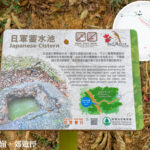
🪖 WWII Japanese Military Relics
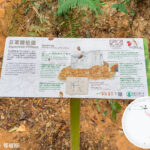
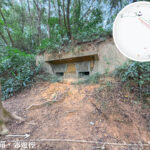
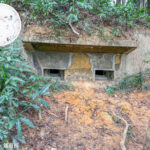
- Includes concrete machine gun pillboxes and networks of trenches.
- Mainly scattered around the vicinity of Shan Tsui Village, with some sections still showcasing their original layouts.
—
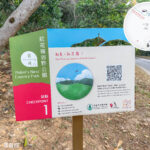
📸 Check-in Challenge
The Agriculture, Fisheries and Conservation Department (AFCD) hosts the “Discover Robin’s Nest Country Park” event:
- 🧭 Features a total of 8 designated check-in locations (via QR code scanning).
- 🎁 Participants who complete all check-ins can redeem prizes such as a titanium camping cup and versatile coasters.
- 📵 Please be aware that mobile phone signals can be highly unstable at certain spots; it is recommended to hike in groups to help each other stay connected.
—
🌄 Scenic Highlights
- 🔭 Ah Kung Kok Lookout: Commands fantastic views over Starling Inlet and downtown Shenzhen.
- 🏞️ Hung Fa Chai: Showcases swaying fields of silvergrass in winter and waves of red azaleas during spring.
- 🌅 Sunset Views: The clear, unobstructed ridge lines offer an open canvas for breathtaking sunsets.
—