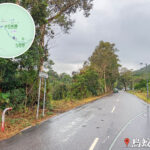
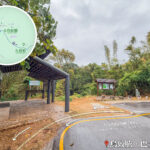
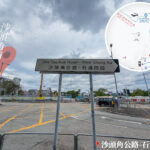
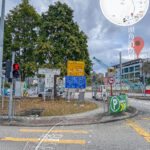
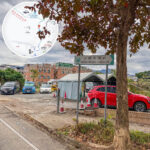
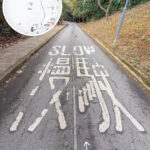
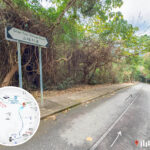
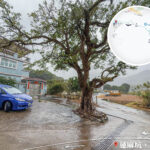
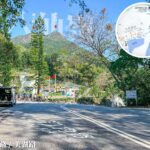
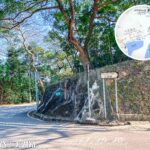
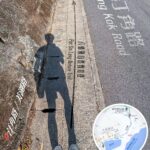
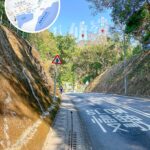
🛣️ 【Roads】 are the lifeblood of transport in Hong Kong, weaving a dense and complex network within a limited land mass that not only shoulders an immense daily traffic volume but also mirrors Hong Kong’s unique topography and urban planning. Inheriting the British system, Hong Kong adopts left-hand traffic, a defining trait that sets its road culture vastly apart from Mainland China and Taiwan. Hong Kong’s road system is characterised by its “high density, left-hand traffic, and interlocking bridges and tunnels”, spanning a total length of approximately 2,248 kilometres, with 22 major tunnels, over 1,400 flyovers and bridges, and more than 1,600 pedestrian footbridges and subways. It stands as one of the busiest and most complex urban road networks globally.
📌 Essential Information
Category Data / Features Representative Examples 🛤️ Total Length Approx. 2,248 km Hong Kong Island: Approx. 450 km Kowloon: Approx. 483 km New Territories: Approx. 1,315 km 🚇 Tunnels 22 major tunnels Cross-Harbour Tunnel 🌉 Bridges 1,476 flyovers and bridges Tsing Ma Bridge 🚶 Pedestrian Facilities 1,633 footbridges and subways Yellow pedestrian button boxes 🚗 Vehicle Count Over 810,000 vehicles High-density traffic volume ↔️ Traffic Direction Inherited from the British system Adopts left-hand traffic 🏙️ Cultural Character Street naming reflects history and geography Nathan Road —Hong Kong’s roads are far more than just flat streets; they form a multi-dimensional transport universe. From the magnificent Tsing Ma Bridge to the bustling Cross-Harbour Tunnel, interlocking bridges and tunnels seamlessly connect mountain ridges and coastal bays, showcasing engineering wisdom and urban efficiency. Pedestrian facilities are equally user-friendly, such as the “yellow boxes” (行人過路按鍵) equipped with audio and tactile vibration prompts, ensuring safe passage for individuals with different needs. These designs are not merely transport utilities but a miniature of Hong Kong’s culture and lifestyle.—
🛣️ Major Facilities & Key Features
- Tunnels
- Cross-Harbour Tunnel: The very first subsea tunnel connecting Hong Kong Island and Kowloon.
- Western Harbour Crossing (WHC): Commissioned in 1997, it is one of the three cross-harbour tunnels.
- There are 22 major tunnels in total across Hong Kong.
- Bridges
- Tsing Ma Bridge: Boasting a main span of 1,377 metres, it is one of the world’s largest double-deck suspension bridges.
- Ting Kau Bridge: Features a cable-stayed design with a main span of 923 metres.
- Flyovers and Bridges: 1,476 structures.
- Pedestrian Facilities
- Pedestrian Footbridges and Subways: 1,633 structures.
- Equipped with “yellow boxes” pedestrian button units that provide audio and tactile vibration prompts to assist visually impaired individuals.
- Octopus cards can be tapped to extend crossing time, catering to the needs of the elderly.
—
🏙️ Road Culture & Urban Identity
- Street Naming
- Reflecting History: Streets like Connaught Road and Des Voeux Road Central are named after colonial officials.
- Reflecting Topography: Prominent roads like Garden Road and Nathan Road, the latter being one of Hong Kong’s busiest arteries.
- Traffic Challenges
- High population density → Road congestion.
- Mountainous terrain → Winding and narrow roads.
- The government implements Electronic Road Pricing (ERP) and public transport priority policies, encouraging citizens to commute via MTR and buses.
- Environmental Protection & Safety
- LPG Vehicle Scheme, establishing gas refilling stations to improve air quality.
- Accessible Design: Traffic lights are integrated with audio prompts and tactile vibration features.
—
🛣️ Special Road Designs
- Expressways
- Such as Tuen Mun Road, Hong Kong’s first expressway.
- Island Eastern Corridor, built along the coastline, offering magnificent scenic views.
- Rural Roads
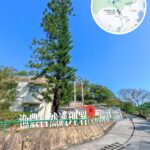
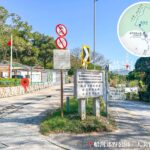
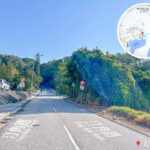
- Single-track two-way roads are commonly seen in New Territories villages, featuring narrow surfaces.
- Mountain Roads
- Such as Peak Road (太平山道), featuring numerous sharp bends and steep gradients.
Category Data / Features Representative Examples 🚀 Expressways Hong Kong’s first expressway, coastal construction, magnificent scenery Such as Tuen Mun Road, Hong Kong’s first expressway; Island Eastern Corridor, built along the coastline, offering magnificent scenic views 🌾 Rural Roads Single-track two-way roads are commonly seen in New Territories villages, featuring narrow surfaces – ⛰️ Mountain Roads Abundant sharp bends, steep gradients, built along mountain ridges Peak Road —
🚦 Traffic Control Design & Human-Centric Features
- Traffic Lights
- The first batch of automatic traffic lights was introduced in 1968.
- Modern systems incorporate pedestrian push buttons and are equipped with audio prompts and tactile vibration mechanisms to aid visually impaired individuals.
- “Yellow Box” Pedestrian Push Buttons
- Displays “Wait” (請等候) once pressed and emits a prompt tone.
- Vibrates at the bottom to guarantee an accessible design for all.
- Road Signs
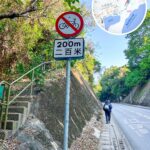
- Bilingual in Chinese and English.
- The usage of “Give Way” instead of “Yield” is common, reflecting British traffic culture.
—
🌉 Major Bridges & Tunnels
The defining character of Hong Kong’s roads lies in giving “equal emphasis to both bridges and tunnels”, linking mountain ridges and coastal bays.
- Tsing Ma Bridge
- One of the world’s longest double-deck suspension bridges, featuring a main span of 1,377 metres.
- The upper deck carries vehicular traffic, while the lower deck houses a railway track (MTR Tung Chung Line).
- Ting Kau Bridge
- Features a cable-stayed design supported by three main towers, spanning across Ting Kau Bridge/Bay.
- Stonecutters Bridge
- Boasts a main span of 1,018 metres, linking to the Kwai Tsing Container Terminals.
- Cross-Harbour Tunnel (Hung Hom)
- Hong Kong’s first cross-harbour tunnel, connecting Kowloon and Hong Kong Island, with a daily traffic volume exceeding 110,000 vehicles.
- Western Harbour Crossing (WHC)
- Features the highest toll, but traffic remains relatively smooth and fluent.