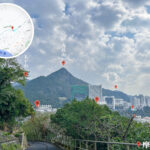
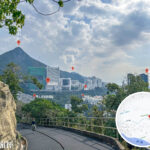
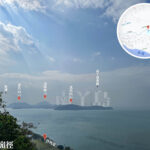
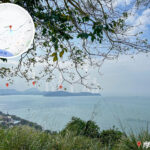
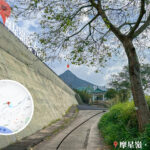
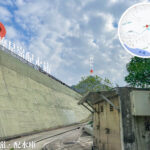
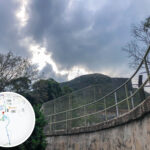
💧 【Service Reservoirs】 Hong Kong’s service reservoir system comprises approximately 179 fresh water service reservoirs, among which 15 are main service reservoirs, with a total storage capacity of around 4.35 million cubic metres. Their primary functions are to temporarily store treated fresh water, regulate water pressure, and provide a buffer during water main maintenance or supply failures. Due to Hong Kong’s mountainous terrain, most service reservoirs are constructed on highlands, utilizing the principle of gravity flow to distribute water to downstream users in low-lying areas, while working in tandem with pumping stations to ensure stable water supply for high-level districts. This layered network design allows Hong Kong to maintain a highly stable water supply within a densely populated urban environment.
📌 Basic Data
Item Data Total Quantity 179 fresh water service reservoirs (including 15 main service reservoirs) Total Capacity Approx. 4.35 million cubic metres Total Length of Water Mains Approx. 6,700 kilometres Primary Functions Temporary storage of fresh water, water pressure regulation, coping with peak demand —
🌍 Geographical Distribution Features
Hong Kong is characterized by abundant mountains and limited flat land; hence, service reservoirs are mostly built on highlands to facilitate gravity-fed water supply.
Hong Kong Island
- Pok Fu Lam Reservoir: One of the earliest reservoirs in Hong Kong, completed in 1863.
- Tai Tam Reservoir Group: Located in the Southern District of Hong Kong Island, supporting the southeastern part of the island.
Kowloon
- Kowloon Reservoir: Located south of Shing Mun, serving as one of the primary water supply sources for Kowloon.
- Shek Lei Pui Reservoir: Interconnected with the Kowloon Reservoir group, supporting urban water supply.
New Territories
- Shing Mun Reservoir: Located north of Tsuen Wan, supplying the western New Territories and Kowloon.
- Plover Cove Reservoir: The world’s first freshwater reservoir constructed by reclaiming a coastal bay, supplying the northeastern New Territories.
- High Island Reservoir: The reservoir with the largest water storage capacity in Hong Kong, situated in Sai Kung.
—
⚙️ Functions & Operations
- Temporary Storage of Fresh Water: To meet daily peak water demands.
- Water Pressure Management: Elevated highland positions guarantee a stable water supply.
- Emergency Standby: Serves as a buffer during maintenance or unexpected failures of primary trunk water mains.
—
🗺️ Distribution Schematic of Reservoirs
Region Representative Reservoirs Key Features Hong Kong Island Pok Fu Lam, Tai Tam Boast long histories, supplying the core urban center Kowloon Kowloon Reservoir group, Shek Lei Pui Primary water supply sources for densely populated urban zones New Territories Shing Mun, Plover Cove, High Island Boast the largest capacities, concurrently balancing natural conservation —
🏞️ Characteristics & Significance
- Topographic Adaptation: Hong Kong’s mountainous terrain necessitates layered configurations.
- Historical Value: Landscapes like Pok Fu Lam Reservoir stand as living testaments to 19th-century urban development.
- Modern Functionality: Integrating Dongjiang water with local reservoirs to guarantee absolute water supply security.