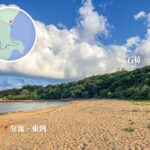
🪨 【Fan Lau Stalagmite(分流 石筍)】 is a famous natural landform in the Fan Lau area at the southwestern tip of Lantau Island , Hong Kong, located near Fan Lau East Bay. It is a towering, massive granite boulder that gets its name from its sharp, prominent shape that closely resembles a bamboo shoot bursting from the ground. In ancient times, the Fan Lau area was even known as “Stalagmite Village” due to this colossal rock, reflecting its long history as a landmark. Formed through long-term weathering and erosion, this boulder beautifully showcases Hong Kong’s unique coastal geological features. —
📌 General Information
Category Details 🪨 Name Fan Lau Stalagmite, also known as Stalagmite Village, historically marked as “Shek Sun” on old maps 📍 Location Situated on the southeastern side of the Fan Lau Peninsula at the southwestern tip of Lantau Island , within the boundaries of South Lantau Country Park 🗺️ Landform Features A granite monolith shaped like a bamboo shoot or crab claw, standing out prominently on the hillside overlooking Fan Lau East Bay 📏 Height Approximately 30 metres 👀 Viewing Spots Visible from Fan Lau East Bay Beach or the footpaths near Fan Lau Fort 🏛️ Historical Background The origin of the local village’s historical name; surrounded by historical treasures like Fan Lau Fort and the Fan Lau Stone Circle, both of which are declared monuments 🚶♂️ Hiking Route Accessible from Shek Pik or Tai O via Lantau Trail Section 7 and the Fan Lau Country Trail, spanning a total distance of about 16.5–17.5 km —
🧭 Geography & Naming Origin
- Fan Lau Stalagmite is perched on the southeastern hillside of the Fan Lau Peninsula, directly overlooking Fan Lau East Bay .
- Its shape bears an uncanny resemblance to a sprouting bamboo shoot, which earned it the name “Stalagmite”.
- In ancient times, a stalagmite resembling a human face stood here, leading Fan Lau Village to be traditionally called “Stalagmite Village”.
— For travelers journeying to Fan Lau, Fan Lau Stalagmite is an absolute must-see highlight when exploring the area. Hikers can easily spot it while making their way to Fan Lau Fort or Fan Lau East Bay. Because there are no carriage roads leading directly to the Fan Lau area, visitors must catch a bus from Tung Chung or Mui Wo to Shek Pik , followed by a roughly 2-hour trek via Kau Ling Chung . Though the journey is long, the striking silhouette of the stalagmite paired with the surrounding coastal scenery—including the famous sea-splitting phenomenon where the muddy waters of the Pearl River Estuary meet the clear blue waters of the South China Sea—makes the trek incredibly rewarding. —
🥾 Hiking Route
🔸 Recommended Route: Shek Pik → Tai O
Trail Section Chinese Name Features Shek Pik 石壁 Starting point; easily accessible by bus Kau Ling Chung 狗嶺涌 Beautiful beach and scenic campsite Southern Boundary Stone 嶼南界碑 A deeply historical boundary monument Fan Lau East Bay 分流東灣 Offers a fantastic distant view of the Stalagmite Fan Lau Stalagmite 分流 石筍 The iconic landmark monolith Fan Lau Fort 分流炮台 An ancient Qing Dynasty heritage site Fan Lau Stone Circle 石圓環 A fascinating prehistoric archaeological site Fan Lau West Bay 分流西灣 A peaceful sandy beach and quaint village Tsin Yue Wan 煎魚灣 Coastal camping spot Yi O 二澳 A traditional farming village under revitalization Tai O 大澳 The finishing fishing village; ferry or bus options to leave
- 🕒 Time Required: Around 6–8 hours
- 📶 Difficulty: Moderate
- 🍫 Replenishment Points: Local stores are available in Fan Lau Village, Yi O, and Tai O
—
📸 Scenic Highlights
- Take in the magnificent, sweeping ocean vistas of the South China Sea along the trail.
- The Stalagmite looks as if it is bursting directly out from the earth’s crust—firm, striking, and visually powerful.
- Fan Lau Fort and the Stone Circle offer a journey back in time, letting you soak in Hong Kong’s military and prehistoric heritage.
- The bays along the path are picture-perfect, with the view looking down from the heights over Fan Lau East Bay being particularly breathtaking.
- At sunset, you can gaze out towards Kai Yik Kok and its tied island tombolo for an unforgettable view.
- Fan Lau Stalagmite itself is a major hotspot for photography buffs, where the massive rock, sea, and sky weave into a stunning frame.
—
🧭 Quick Tips
- We highly recommend starting your hike early in the morning to make sure you are not caught on the trails after dark.
- Essential Gear: Sun protection, a hat, plenty of water, food, a flashlight, and a reliable map.
- Be aware that several sections of the trail are completely exposed to the sun; it can get very hot in the summer, so please hike within your limits.
- Certain areas around Yi O Village may have restricted access, so please respect any local village notices.
—
📖 Legends & Lore
- Legend has it that in ancient times, a rock formation resembling a human face sat high upon the cape, which led to Fan Lau Village being historically called “Stalagmite Village”.
- Even though that human-faced rock has long disappeared, Fan Lau Stalagmite still stands tall and proud, bearing witness to the relentless march of time.
—
🏯 Surrounding Heritage Sites
Beyond its striking natural beauty, Fan Lau is deeply rich in historical and cultural heritage treasures:
🔹 Fan Lau Fort
- Built during the Kangxi reign of the Qing Dynasty, it stands as one of the oldest forts in Hong Kong.
- Constructed out of granite and blue bricks, it measures about 46 metres long and 21 metres wide.
- It historically served to guard the vital shipping channels of the Pearl River Estuary against pirates and foreign invaders.
- The fort was gradually abandoned in the late Qing Dynasty following the British lease of the New Territories in 1898.
🔹 Southern Boundary Stone
- Erected in 1902, this stone marks the boundary line of the New Territories lease.
- Carved into this granite monument is the exact longitude line of 113°52’E, serving as a vital witness to Hong Kong’s history.
🔹 Fan Lau Stone Circle
- Dating back roughly 3,500 years to the Late Neolithic or Early Bronze Age, this structure’s exact purpose remains a mystery, though it may have been used for rituals or astronomical tracking.
- Formed by arrangement of natural stones into an oval shape, it stands as one of Hong Kong’s rare prehistoric cultural ruins.
🔹 Fan Lau Lighthouse
- Located just a short 10-minute walk along the footpath, this impressively sized structure offers excellent maritime navigation utility alongside great viewing value.
—