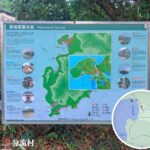
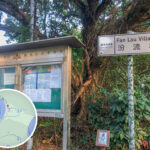
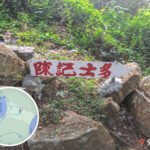
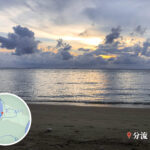
🏞️ 【Fan Lau Village (分流村)】 is an ancient fishing village tucked away at the southwestern tip of Lantau Island, Hong Kong. Nestled along the coast of the Fan Lau Peninsula, it got its name “Fan Lau” (meaning “dividing the flow”) because it sits right where the Pearl River Estuary meets the South China Sea. The village’s history dates back to the Qing Dynasty, when it was a bustling community made up of several smaller hamlets. Today, it still holds cultural treasures like a Tin Hau Temple, a historic fort, and Qing Dynasty rock inscriptions. Among these, the “Fan Lau Top” inscription carved in 1820 has been declared a monument, standing as a testament to ancient maritime trade routes. —
📌 Quick Facts
Category Details 🏞️ Name Fan Lau Village 📍 Location Southwestern tip of Lantau Island, Hong Kong (within South Lantau Country Park limits); the most southwestern landmass in HK 🌊 Geography Surrounded by the sea on three sides, looking south towards Guishan Island in Zhuhai, bordering Kau Ling Chung to the east, and Peaked Hill (Kai Yi Kok) to the northwest. Features rugged terrain. 🧭 Name Origin Situated at the confluence of the Pearl River and the South China Sea, where the muddy yellow river water meets the clear blue ocean water, creating a distinct “split-flow” phenomenon. Hence the name “Fan Lau”. Old Names Previously known as “汾流” (Fan Lau) or “Shek Sun Village” (石筍村). The official English name was standardized as Fan Lau after 1957. 🏛️ History Human activity here dates back to the late Neolithic period. It served as a vital shipping channel and military outpost during the Ming and Qing Dynasties. 🧱 Current State Now a deserted village with no permanent residents, keeping it highly untouched and undeveloped. 🏯 Heritage Sites Fan Lau Fort (Qing Dynasty), Fan Lau Stone Circle (Neolithic period), Fan Lau Tin Hau Temple, and the South Lantau Obelisk. 🗺️ Getting There No direct road access. Requires a 2-hour hike from Shek Pik or Tai O via Lantau Trail Section 7 or Lantau Trail Section 8. 🥾 Hiking Route Shek Pik → Kau Ling Chung → Fan Lau Eastern Wan → Fan Lau Fort → Fan Lau Western Wan → Tsin Yue Wan → Yi O → Tai O ⛺ Natural Scenery Scenic beaches including Fan Lau Eastern Wan, Western Wan, and Tsin Yue Wan—perfect for camping and stargazing. 🪧 Cultural Heritage Shek Sun Village (the old name of Fan Lau Village), Fan Lau Lighthouse, and the boundary obelisk that marks HK’s colonial leasing history. ⚠️ Notable Events Site of historical maritime accidents (like the SS Fatshan incident in 1963), highlighting the navigational risks of its location. — What makes this village truly special is how seamlessly nature and history come together. The surrounding waters showcase a rare two-tone sea phenomenon—a sharp, contrasting boundary of yellow and blue water created by the mixing of fresh and saltwater—alongside the mangrove ecosystem of the Yi O valley. The cluster of abandoned stone houses in the village offers a striking contrast to the few remaining small-scale fishing operations. Built in 1729, the Fan Lau Fort (also known as Kai Yi Kok Fort) was once a key coastal defence outpost for the Qing Dynasty; today, its ruins and watchtower offer panoramic views of the entire channel. —
🏛️ Historical & Cultural Heritage
🔹 Fan Lau Fort (Declared Monument)
- Built during the Yongzheng reign of the Qing Dynasty (around 1729) to defend against pirates.
- Perched on a highland 70 metres above sea level, overlooking the Pearl River shipping lane.
- Measuring about 46 metres long, the fort’s walls are built from granite and blue bricks and are remarkably well-preserved.
🔹 Fan Lau Stone Circle (Declared Monument)
- An archaeological relic dating from the late Neolithic period to the early Bronze Age.
- Its exact purpose remains a mystery, though it is believed to be linked to religious rituals or astronomical observations.
- Declared a monument in 1983, it is one of Hong Kong’s oldest archaeological sites.
🔹 Fan Lau Tin Hau Temple (Grade 3 Historic Building)
- Built in the 25th year of the Jiaqing reign (1820), this waterfront temple is dedicated to the Goddess of the Sea, Tin Hau.
- It is one of the few remaining coastal Tin Hau temples in Hong Kong, reflecting the deep-rooted spiritual culture of local fishermen.
🔹 Ying Kong Leung Ancestral Hall (Grade 3 Historic Building)
- Built in the late Qing Dynasty by the Leung clan of Fan Lau Village.
- It once served as the village school, and clan members still gather here today to pay respects to their ancestors.
- It stands as one of the oldest remaining buildings in the village.
—
🏞️ Natural Scenery & Hiking Trails
🔸 Fan Lau Country Trail
- A coastal trail stretching about 2.3 kilometres.
- Winds past scenic beaches like Fan Lau Eastern Wan, Western Wan, and Tsin Yue Wan.
- Connects directly to Lantau Trail Section 7, which leads all the way to Tai O.
🔸 Lantau Trail Section 7 (Shek Pik to Tai O)
Route Shek Pik → South Lantau Obelisk → Kau Ling Chung → Fan Lau Fort → Yi O → Tai O Distance Approx. 17.5 km Time Approx. 6 hours Difficulty Moderate (★★★☆☆) Refuel Points Local stores (store-front cafes) available at Fan Lau Village, Yi O, and Tai O 🔸 Kau Ling Chung & The South Lantau Obelisk
- Kau Ling Chung is a key natural landmark along the way and features a dedicated campsite.
- The South Lantau Obelisk, erected in 1902, marks the historical boundary of the New Territories lease.
— Because it’s so remote and has no road access, getting here requires taking a kai-to ferry from Tai O or Tung Chung (about a 30-minute boat ride) or tackling a 2-hour hike along the Lantau Trail. Only a handful of residents remain in Fan Lau Village today. Its raw, desolate beauty and rich sense of history draw hikers and culture buffs alike. Just keep in mind there are no proper commercial facilities here, so you must bring your own food and water. It serves as both a living museum of Hong Kong’s frontier life and a timeless dialogue between maritime culture and the power of nature. —
🚶♂️ How to Get There & Hiking Routes
🚍 By Land
- Take bus 11 or 23 from Tung Chung to Shek Pik.
- Hike for about 2 hours via Lantau Trail Section 8 to reach Fan Lau.
🚤 By Water
You can hire a private sampan/boat from Tai O (about a 30-minute ride, booking required).
🥾 Hiking Highlights
- Kau Ling Chung → Fan Lau Fort → Fan Lau Eastern Wan → Fan Lau Western Wan → Yi O → Tai O
- The entire route is about 17.5 km, takes roughly 6 hours, and is rated as moderate difficulty.
⚠️ Note: There is no direct road access to Fan Lau Village—it’s strictly hike-in only. There is almost no mobile signal along the way, so it’s highly recommended to hike with a buddy. —
🧭 Name Origin & History
- “Fan Lau” (分流) was originally written as “汾流”. It earned its name because it sits right at the boundary of the Pearl River and the South China Sea, where the distinct split between the muddy yellow river water and clear blue ocean water is plain to see.
- Its English name is Fan Lau, though early maps recorded it as Shek Sun (石筍).
- During the Ming and Qing Dynasties, Fan Lau was a crucial and strategically vital shipping lane for vessels heading north towards Guangzhou.
—
🏡 Fan Lau Village Today & Local Vibe
- Most villagers have long moved out, leaving only a few residents behind.
- There are local village stores (士多) where you can stock up on drinks and basic snacks.
- With its lush green grass and peaceful atmosphere, the village feels like a quiet, rustic poem.
- There were previous revitalisation plans for the village, which brought features like flower fields and restored trail signs.
—
🛳️ The 1963 Collision: SS Fatshan and San Tong Wing
- In November 1963, the Hong Kong-Macau passenger ferry “SS Fatshan” collided with the cargo vessel “San Tong Wing” near the Fan Lau Lighthouse, causing the cargo ship to sink.
- Seven crew members managed to swim ashore, scaling the rugged hills to reach Tai O and report the accident to the police.
- The incident caught massive public attention and remains a notable case in Hong Kong’s maritime history.
—
🏘️ Current State of the Village
- The village is now mostly abandoned, saved only by a few remaining residents and basic village stores.
- The area is blanketed in lush green grass and wrapped in a tranquil silence, often described as a peaceful, emerald countryside getaway.
- The villagers are mostly from the Leung clan, originally from Shenzhen. They used to make a living through farming and fishing, often sailing their catch over to Macau to sell.
—
🎒 Tips for the Trip
- 🥾 Wear proper hiking shoes with good grip.
- 🧃 Bring plenty of your own water and food.
- 📵 Expect zero mobile signal—let family or friends know your schedule beforehand.
- 📸 Bring a camera; the sunset views here are absolutely stunning.
- 🧭 Download offline maps or bring a physical map just in case.
—