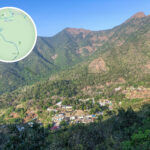
🏡 【Ma On Shan Tsuen】(Ma On Shan Village) is located on the hillsides of Ma On Shan in the Shatin District of the New Territories. Backed by lush mountains and facing the sea, this peaceful enclave was once one of Hong Kong’s most vital mining settlements. The village is split into Upper Village and Lower Village. In the old days, villagers relied on farming and logging, but it gradually exploded into a key mining community due to the neighboring Ma On Shan Mine. Boasting a unique geographic location that overlooks Tolo Harbour while sitting right next to the country park, it creates a fascinating space where natural scenery seamlessly intertwines with local history.
📌 Quick Facts
Category Details 🗺️ Location Ma On Shan hillsides, right next to Ma On Shan Country Park 🏘️ Divisions Split into Upper Village and Lower Village 👨👩👧 Founders The Wan clan from Guangdong 👥 Peak Population Around 5,000 residents (during the 1950s–1960s) ⛏️ Mining Industry Iron and tungsten ore; operated by Mutual Trust Company 🏚️ Main Ruins 240ML Mine Adit, mineral processing plant, explosives depot, open-cast mine ⛪ Religious Heritage St. Joseph’s Church, Grace Lutheran Church 📉 Current Status Many village houses are abandoned; parts of the land are rezoned for residential development ⛰️ Mountain Features Ma On Shan has twin peaks—Ma Tau Ting (Ma On Shan Peak) stands at around 702m, making it HK’s fourth-highest peak, while the secondary peak is Ngau Ngak Shan. The curved ridge between them looks just like a saddle, giving the mountain its name. 🚶♂️ Transport Relies heavily on Ma On Shan Tsuen Road (also known as Leung Yau Road) for access — The story of Ma On Shan Tsuen is not just a snapshot of rural village life, but a living testament to Hong Kong’s modern industrial history. In the mid-20th century, iron and tungsten mining brought massive boom times to the area, with the population peaking at 5,000 to form a fully self-sustained mining community. St. Joseph’s Church and Grace Lutheran Church were built within the village, serving as the spiritual and cultural backbones for the miners. Following the closure of the mine in the 1970s, the village gradually faded, but its ruins and historic buildings still stand today, making Ma On Shan Tsuen a major flashpoint in the ongoing debate between heritage conservation and urban development. —
🏡 Village History
- Founders: Established in the late 19th century by the Wan family from Guangdong, originally called “Wen Family Village” (Wan Ka Tsuen).
- Early Days: Villagers lived a simple life, surviving on subsistence farming (paddy, sweet potatoes, peanuts, taro) and chopping firewood.
- The Mining Boom:
- In the 1940s, Japanese forces discovered iron and tungsten deposits and kicked off mining operations.
- In 1949, Yu Wing-kam from Taishan founded the Mutual Trust Company to run the mine, later partnering with Japan’s Kamaishi Mining to bring in advanced tech to boost ore quality.
- The industry hit its golden age in the 1950s and 60s, drawing in waves of workers and their families, creating a tight-knit mining community with a peak population of 5,000.
- The Decline: The mine shut down in 1976, and the government officially terminated the mining license in 1981, leading villagers to gradually pack up and move away.
—
⚒️ Mining Background
- Main Minerals: Iron Ore and Tungsten Ore.
- Tech Upgrades: Technical guidance from Japan’s Kamaishi Mining pushed the iron content of the refined ore past 50%.
- Output: In the 1950s, annual production reached 150,000 tonnes of concentrate, with peak daily output hitting 1,300 tonnes.
- Ruins: Remaining sites include the open-cast mine, various adits (including the famous 240ML pit), the explosives depot, and the ore processing plant.
—
⛪ Religious & Cultural Landmarks
- St. Joseph’s Church: Built in 1952 by a Belgian priest, this Gothic-style church was the spiritual hub for Catholic miners. It is now a Grade 2 historic building but sits completely abandoned.
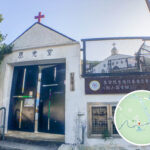
- Grace Lutheran Church: Completed in 1952 as the Evangelical Lutheran Church of Hong Kong’s very first self-built chapel, it has now been revitalized into the Ma On Shan Mining Heritage Centre.
- Mining Relics: Includes the open-cast quarry, mine tunnels (like the 240ML adit), explosives storerooms, engine rooms, and the dressing plant.
—
🚧 Modern Development & Conservation Debates
- Real Estate Projects: In 2005, Sun Hung Kai Properties secured approval to build 180 detached luxury houses in the area.
- Government Planning: In 2020, the government gazetted plans to rezone the village land into a private, medium-density residential zone, sparking heavy backlash from conservationists.
- Current Heritage Status:
- St. Joseph’s Church is rated Grade 2 but is currently left derelict.
- Grace Lutheran Church is rated Grade 3 and has been successfully transformed into the Heritage Centre.
- Most mining ruins are abandoned, with some falling victim to graffiti or used as rogue filming locations.