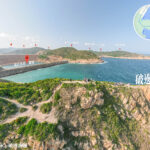
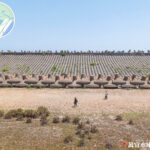
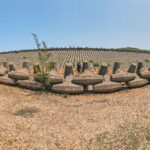
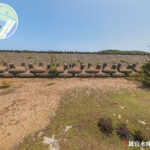
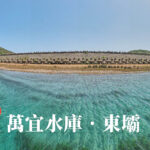
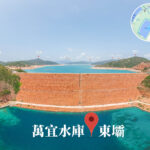
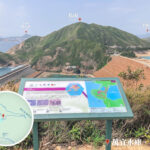
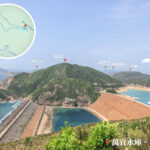
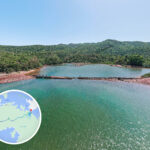
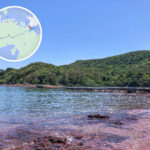
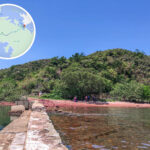
💧【Dykes and Dams】 are not only historical and cultural heritages but also the core of modern water supply systems. They are divided into two main categories: stone-built dykes in Hakka villages used for “reclaiming land from the sea,” and large-scale dams constructed by the government primarily serving urban water supply and flood control. A more detailed breakdown is provided below.
📌 Basic Information
Function Description Representative Locations 🛡️ Flood Control & Farming Traditional dykes block sea tides, safeguard village safety, and expand brackish fields for cultivation Luk Keng, Kuk Po 💧 Urban Water Supply Modern dams and reservoir systems secure the drinking water supply for Hong Kong’s population of around 7 million High Island Reservoir, Pok Fu Lam Reservoir 🏯 Cultural Heritage Dykes bear witness to the Hakka people’s wisdom in transforming landscapes and rural history Fung Hang, So Lo Pun 🎒 Tourism & Education Selected dams and reservoirs have become popular spots for hiking, education, and ecotourism Tai Tam Tuk Reservoir, Tai Mei Tuk —
🏯 Traditional Dykes (Reclaiming Land from the Sea)
- Origins: After the rescission of the Evacuation Edict in the early Qing Dynasty, Hakka people moved into remote coastal areas, utilizing dykes to block tidal waters and cultivate brackish fields.
- Distribution Locations: Mainly in Northeast New Territories (Luk Keng, Kuk Po, Fung Hang, So Lo Pun).
- Construction Techniques:
- Stacked stones form the main structure to withstand ocean waves.
- “Oyster lime” mixed with sea sand was used as an early form of cement.
- Bamboo poles were first inserted for alignment, after which stone-stacking masters led villagers to build up layer by layer.
- Construction required cross-village cooperation, embodying neighborhood mutual aid.
- Cultural Significance: These dykes are symbols of the Hakka people’s transformation of their environment, witnessing the survival wisdom of Hong Kong’s rural society and serving as a symbol of village community cohesion.
—
💧 Modern Dams and Reservoirs
- Origins: Lacking large rivers and lakes, the government began constructing reservoirs and dams in the 19th century. The first was Pok Fu Lam Reservoir.
- Quantity and Capacity: Hong Kong currently features 18 potable water reservoirs with a total capacity of approximately 586 million cubic meters, capable of supplying around 150 days of water consumption.
- Primary Sources:
- Local Catchments: Account for about 20–30% of daily water consumption.
- Dongjiang Water: Imported via the “Dongshen Water Supply Project,” accounting for the major proportion of the water supply.
- Catchment System: Consists of dams, catchwaters, pumping stations, and water tunnels, covering about one-third of Hong Kong’s total land area.
—
🌟 Representative Dams and Reservoirs
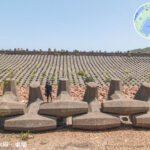
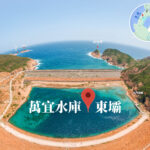
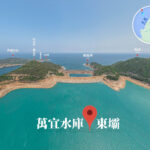
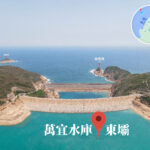
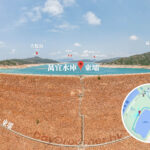
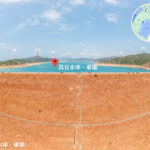
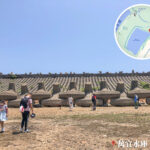
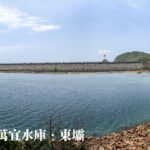
Reservoir Name Completion Year Capacity (Million $m^3$) Features Location Pok Fu Lam Reservoir 1863 0.233 Hong Kong’s oldest reservoir Hong Kong Island West Tai Tam Reservoir 1889 1.490 Multiple dam clusters with a magnificent structure Hong Kong Island East Shek Lei Pui Reservoir 1925 — Highest altitude, with a water level of 195.1 meters Sha Tin High Island Reservoir 1970s Largest Scale Hong Kong’s largest reservoir; the dams connect the Sai Kung coastlines, creating a spectacular structure that integrates with geopark landscapes Sai Kung Plover Cove Reservoir 1968 — The world’s first freshwater lake built by reclaiming a sea bay Tai Po Aberdeen Lower Reservoir 1890 0.486 Early water supply for Hong Kong Island Aberdeen —
🧭 Summary
- Traditional Dykes: Showcase the Hakka people’s agricultural wisdom of “adapting to local conditions.”
- Modern Dams: The lifeline of Hong Kong’s water supply, combining engineering technology with nature conservation.
- Fusion of Culture and Nature: From the stone dykes of Luk Keng to the mega dams of High Island, these are both historical witnesses and popular scenic spots for citizens to unwind.