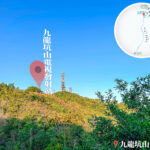
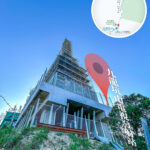
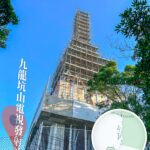
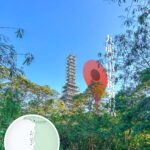
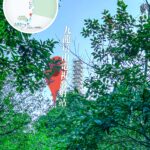
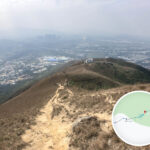
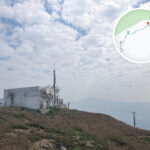
📡 【Hong Kong Television Broadcast Transmission Stations】 are primarily located on various mountain peaks and serve as the core infrastructure for the territory’s digital terrestrial television (DTT) and radio signals. Hong Kong’s television network is built around DTT, achieving coverage for over 99% of the population. Digital broadcasting officially launched on December 31, 2007, and following the final termination of analog television broadcasting on November 30, 2020, Hong Kong entered the full-digital era. Currently, there are 31 digital terrestrial television transmission stations across the territory, categorized into “Main Stations” and “Fill-in Stations,” forming a multi-layered and mutually supportive coverage network. —
🏔️ Six Main Transmission Stations (Core Hubs)
Station Key Function Power Elevation Coverage Area Tsz Wan Shan Early core hub; relays signals to other stations 1000 ~488m, Central Kowloon North HK Island, Kowloon, parts of Sha Tin Castle Peak Main hub for NW New Territories and Western outlying islands 320 ~583m, NW Tuen Mun Tuen Mun, Yuen Long, Lantau Island West Cloudy Hill Targets New Territories East and valley fringes 1000 ~440m, NT East SE ridge Tai Po, Fanling, Sha Tin North Golden Hill Central hub for high-density urban areas 320 ~369m, Shing Mun area Tsuen Wan, Kwai Tsing, Tsing Yi Fei Ngo Shan High altitude, broad coverage for Kowloon/East HK Island corridor 320 ~602m, East Kowloon Sai Kung, Kwun Tong, Eastern District Lamma Island Coverage for southern waters and southern outlying islands 150 ~300m, Island highlands Southern District and Southern outlying islands —
🗺️ Overall Network Architecture
- Total Stations: 31
- Classification: 6 Main Stations; 25 Fill-in Stations
- Transmission Process: TV Station signals → Tsz Wan Shan → Microwave link transmission to other main stations → Distribution to fill-in stations → UHF frequency broadcasting
—
🔁 Network Operations and Signal Transmission
- Core Path: Signals are first sent from TV stations to the Tsz Wan Shan transmission station, then relayed via microwave links to other transmission stations. Upon receipt, each station converts the signal to the UHF band for broadcasting.
- Division of Labor: The six main stations were constructed and operated by Television Broadcasts Limited (TVB) and Asia Television (ATV). Main stations carry higher power and are responsible for relaying signals to multiple fill-in stations.
—
🛰️ Fill-in Transmission Stations (Precise Coverage)
- Function: Fill-in stations have lower power and smaller scales, with some installed on building rooftops. Some also serve as relay stations, passing signals to other fill-in stations.
- Representative Examples: Sai Wan Shan, Nam Long Shan, Beacon Hill, Piper’s Hill, Sheung Yeung Shan, Stanley, Cheung Chau.
- Special Sites: Ma Wan, Shek Pik.
- Rooftop Stations: Pok Fu Lam, Ap Lei Chau, Sham Tseng, Tung Chung
—
📡 Coverage Characteristics and Topographic Impact
Hong Kong features dense mountain ranges and high-rise building clusters, which are prone to signal obstruction and multipath interference. A “High-altitude Main Station + Community Fill-in Station” strategy is used to complement these challenges. While digitalization has eliminated “ghosting” and “snow” interference, it can result in “pixelation” or “freezing” (cliff effect) at the limit of reception. —
⛰️ Geographical Distribution and Site Selection Logic
- Mountain Peaks Priority: Main stations are located at high-altitude peaks, prioritizing line-of-sight transmission and wide-area coverage.
- Cross-District Relay: Tsz Wan Shan serves as the upstream hub, distributing signals via microwave links.
- Coverage Achievement: Over 99% of Hong Kong’s population is covered.
—
🆕 Standards and Evolution
- Digital Standard: Hong Kong adopts China’s DTT standard, DTMB.
- Phased Rollout: Phased launch began in 2007; analog broadcasting was terminated on November 30, 2020.
- Signal Quality: Digital broadcasting eliminates traditional analog interference but is susceptible to image freezing in poor reception conditions.
—
📐 Historical Milestones and Regulatory Framework
- Analog Era: In 1967, the Tsz Wan Shan transmission station was commissioned, becoming Hong Kong’s first TV station, primarily transmitting analog signals for TVB.
- Digital Era: In 2007, Hong Kong commenced digital terrestrial television broadcasting, with Tsz Wan Shan serving as the core hub. On December 1, 2020, Hong Kong entered the full-digital era.
- Key Timeline:
- 1998–2004: Government review and selection of DTMB.
- 2007: Digital TV launch.
- 2020: Analog TV shutdown, full digitization.
- Regulatory Authority: Communications Authority.
—
📶 Technology and Coverage
- DTT: Hong Kong’s DTT signals are transmitted through a network of main and fill-in stations, providing High Definition (HD) programming.
- Radio Broadcasting: Radio signals, including FM and AM channels (e.g., RTHK and CRHK), are also transmitted via these facilities.
For further information, please refer to the Communications Authority website or relevant technical documentation.