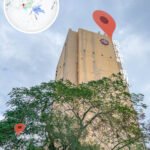
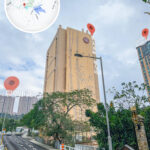
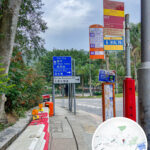
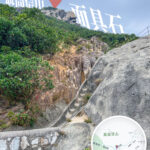
🏙️ 【Wan Chai】is located on the north shore of Hong Kong Island, serving as an urban microcosm where the old and the new seamlessly intertwine. Here, the magnificent coastal vistas of Victoria Harbour meet a hilly topography cradled by Jardine’s Lookout, creating a unique “mountains-meet-the-sea” landscape. Far more than just a transport hub connected to Kowloon via the Cross-Harbour Tunnel, Wan Chai is a dynamic crossroads of commerce and culture that radiates energy day and night. —
📌 General Information
Item Information Name Origin The name “Wan Chai” (meaning “little bay” in Cantonese) stems from the small coastal inlet that originally existed around the Hung Shing Temple. In the old days, due to its low-lying terrain, it was colloquially known as “Ha Wan” (Lower Ring). Administrative District One of the 18 districts of Hong Kong, bordered by the Central and Western District and the Eastern District. Location Situated on the north shore of Hong Kong Island, bordered by Admiralty to the west, Causeway Bay to the east, Jardine’s Lookout to the south, and Victoria Harbour to the north. Area Approximately 10.64 square kilometres Population Around 166,700 (with a daily transient and commuting population of about 600,000) Key Areas Wan Chai, Causeway Bay, Happy Valley, Tai Hang Iconic Landmarks Hong Kong Convention and Exhibition Centre, Golden Bauhinia Square, Central Plaza, Blue House, Hung Shing Temple Transport MTR Island Line, Cross-Harbour Tunnel, Hong Kong Tramways, buses, minibuses, and cross-harbor ferries —
🏛️ Historical Background
- Inhabited by fishermen as early as the Qing Dynasty.
- During the early colonial era, it was planned as an upscale residential area, featuring the historical “Spring Gardens”.
- In the mid-19th century, Christian and Catholic missions established cemeteries, hospitals, and orphanages in the area.
- Successive land reclamation projects since the 1920s gradually shaped the Wan Chai we know today.
- The opening of the Cross-Harbour Tunnel in 1972 solidified Wan Chai as a crucial conduit between Hong Kong Island and Kowloon.
—
🌟 Major Landmarks & Attractions
Location Special Features Golden Bauhinia Square Symbolizes the handover of Hong Kong, hosting daily national flag-raising ceremonies. Happy Valley Racecourse The beating heart of Hong Kong’s legendary horse racing culture. Tai Yuen Street Affectionately known as “Toy Street,” lined with nostalgic toy shops and specialty stalls. Queen’s Road East Famous for its traditional Chinese antique shops and artisanal furniture boutiques. Lockhart Road The core of the district’s vibrant nightlife and classic bar culture. Jardine Noonday Gun A century-old tradition featuring a daily ceremonial gunshot fired precisely at noon. Hong Kong Convention and Exhibition Centre A world-class venue hosting premier international exhibitions, conventions, and summits. Central Plaza An iconic skyscraper piercing the skyline at a towering height of 374 metres. Blue House Clusters A highly decorated, award-winning block of historical Tong Lau (tenement buildings) representing local heritage. Hung Shing Temple A historic temple built into the original boulder coastline during the 19th century. Pak Tai Temple A deeply revered Taoist temple constructed in 1863. —
🚇 Transport Network
- MTR Wan Chai Station: A major arterial station serving the Island Line network.
- Cross-Harbour Tunnel: Completed in 1972, providing the first vehicular link between Hong Kong Island and Kowloon.
- Main Thoroughfares: Queen’s Road East, Hennessy Road, and Lockhart Road cut horizontally across the district.
—
🗺️ Geographical Features
- Reclaimed Coastline: Originally a small fishing inlet, massive land reclamation has progressively pushed the coastline northwards, turning the northern flat lands into a high-octane commercial core.
- Hilly Topography: The southern margins transition into steep hill slopes (such as Wan Chai Gap) alongside Jardine’s Lookout and the natural bowl of the Happy Valley Racecourse.
- Strategic Transport Corridor: Major arteries run parallel through the district, and the 1972 completion of the Cross-Harbour Tunnel firmly rooted Wan Chai as a vital crossroads for the territory.
— Across this dynamic landscape, sleek skyscrapers stand shoulder-to-shoulder with historic architecture: the Hong Kong Convention and Exhibition Centre embodies the city’s international, modern face, while the Blue House and Hung Shing Temple preserve the poignant memories of old Hong Kong life. By day, its classic Cha Chaan Tengs and corporate malls buzz with frantic energy; by night, the neon lights of Lockhart Road’s entertainment strip bring the streets to life. Wan Chai is a place where one can experience both high-finance prosperity and authentic neighborhood warmth, making it the perfect starting point to uncover Hong Kong’s cultural narrative. —
🛍️ Lifestyle & Cultural Atmosphere
- By Day: High-energy commercial activity, packed with office commuters, international trade exhibitions, and busy professionals.
- By Night: The lively bar strips and entertainment venues along Lockhart Road become a hub of nightlife activity.
- Cultural Fusion: Modern office towers stand alongside historic shrines, while the Blue House community preserves a living blueprint of traditional Hong Kong life.