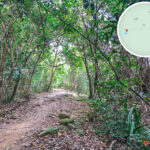
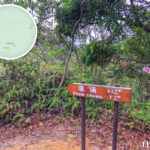
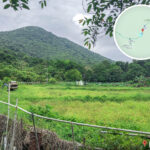
🌿【Pak Sha O (白沙澳)】 is a century-old Hakka village nestled in Sai Kung North in the New Territories of Hong Kong. Encircled by the lush expanses of the Sai Kung West Country Park, it features a tranquil landscape of rolling hills and meandering streams. The settlement is built along the banks of the Pak Sha O River, which flows downstream to connect with the Hoi Ha Wan Marine Park, forming a unique freshwater wetland habitat. This harmonious blend of natural scenery and rich human heritage makes Pak Sha O one of the few rural enclaves in Hong Kong that still retains its pristine, original character. —
🏡 The Fusion of History and Culture
Boasting a history of over a century, the roots of the Pak Sha O settlement can be traced back to the Ming dynasty, when early residents first established a presence here. Following the coastal evacuation orders (Great Clearance) of the Qing dynasty, many Hakka people migrated to the area from mainland China, weaving the distinct fabric of local Hakka culture. Hidden away in a densely wooded valley roughly 400 meters from Hoi Ha, the village is characterized by its signature white-walled, two-story houses bordered by agricultural fields. Historically, the villagers relied primarily on farming, cultivating a variety of fruits and vegetables. Today, visitors can still admire ancestral Hakka architecture, intricate relief murals, and traditional doorways that preserve the echoes of bygone rural life. Beyond its value as a heritage site, Pak Sha O is a thriving ecological sanctuary, serving as a documented home to as many as 75 species of butterflies, 38 species of birds, and various other rare organisms. In recent years, public discussions surrounding development and preservation have put Pak Sha O in the spotlight, highlighting both the historical continuity of Hong Kong’s countryside and the urgent need for environmental conservation. —
📌 General Information
Category Details 📍 District Location Sai Kung North, Tai Po District, New Territories; situated upstream from Hoi Ha and northwest of Wong Shek Pier 🏞️ Environment Completely surrounded by the verdant forests of Sai Kung West Country Park 🏡 Village History Pak Sha O Village has a history spanning over 100 years, preserving old-world lintels and relief frescoes. Landmark structures include Ho’s Ancestral House and the Pak Sha O Youth Hostel 🌿 Ecological Traits 🦋 75 butterfly species; 🐟 11 freshwater fish species; 🐸 8 amphibian species; 🐦 38 bird species; 🦎 23 reptile species ⚠️ Conservation Challenges Not officially covered under the Country Parks Ordinance; recent wetland disturbances have sparked significant concern among environmental groups 📐 Land Zoning Spans a total area of about 33.27 hectares, with 1.38 hectares designated for Village Type Development and the remaining 31.89 hectares classified under an “Unspecified Use Area” —
🏡 Heritage & Settlement History
- Pak Sha O Village (白沙澳村): With over a century of heritage, it stands as one of the few beautifully intact Hakka villages remaining in Hong Kong.
- Architectural Features: Elaborate relief wall murals, ancestral stone door frames, and classic Hakka residential layouts.
- Key Landmarks:
- Ho’s Ancestral House in Pak Sha O — Designated as a Grade I Historic Building.
- Pak Sha O Youth Hostel — Managed by the Hong Kong Youth Hostels Association (HKYHA).
- Zoning Records: According to the statutory layout plan released by the Town Planning Board in 2012, the entire planning area encompasses 33.27 hectares. Out of this, 1.38 hectares are earmarked for Village Type Development, while the other 31.89 hectares are designated as an “Unspecified Use Area.”
—
🌿 Ecology & Biodiversity
- Habitat Type: Highly productive freshwater wetlands (淡水濕地).
- Biodiversity Highlights:
- 🦋 75 butterfly species (accounting for roughly 30% of all butterfly varieties found in Hong Kong).
- 🐟 11 freshwater fish species (including the Three-lined Bullhead, which is classified as Vulnerable).
- 🐸 8 amphibian species.
- 🐦 175 recorded bird species (including majestic birds of prey like the Eurasian Eagle-Owl and Crested Serpent Eagle).
- 🦎 23 reptile species (including formidable species like the King Cobra and Burmese Python).
- Broader Ecological Records: Ongoing wildlife surveys since 1999 have accumulated a total of 175 bird species alongside a diverse array of insects, confirming that the area supports nearly a third of Hong Kong’s native butterfly species.
—
🚶♂️ Excursions & Hiking Trails
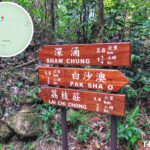
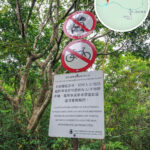
- The hills around Pak Sha O feature numerous hiking trails, making it a favorite hotspot for outdoor enthusiasts in Hong Kong.
- Featured Route:
- Sha Au to Sham Chung Trail: A rewarding trek stretching roughly 12 kilometers that takes about 6 hours to complete. The route leads hikers past Nam Shan Tung, a historic chapel, serene mangrove forests, and Yung Shue O before concluding at Shui Long Wo, where trekkers can catch stunning sunset vistas.
- Transportation: Travelers can catch KMB Route 299X from Sha Tin to Sai Kung town center, and then transfer to New Territories Green Minibus Route 7, which goes directly to Pak Sha O.
- Key Appeal: Interlocking streams, lush marshlands, and ancient hamlets make it an exceptional destination for both ecological field studies and cultural exploration.
- Glowingly Described by the AFCD as: “The best-preserved old village within the Sai Kung West Country Park.”
—
⚠️ Environmental Threats & Conservation
- Pak Sha O is currently not explicitly covered under the protective umbrella of the Country Parks Ordinance.
- In recent years, patches of the local wetlands suffered large-scale unauthorized excavation and damage, prompting strong outcries from local conservation groups.
—
📐 Land Planning & Development Debates
Zoning Classification Surface Area Village Type Development Zone 1.38 hectares Unspecified Use Area 31.89 hectares Geographic Status: Designated as a “Country Park Enclave” (不包括土地), meaning it lacks direct statutory protection from the Country Parks Ordinance. Ongoing applications for small house (Ding House) construction paired with wetland degradation have triggered recurring environmental disputes. —
🔎 Further Exploration
For a deeper look at the historic architecture, ecological preservation, and hidden country trails around this pristine Hakka settlement, check out 《 Pak Sha O • Daydreamer 》. —