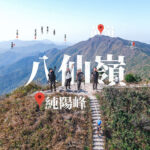
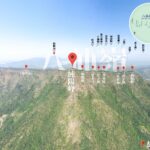
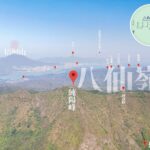
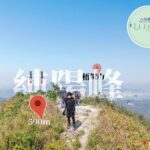
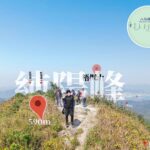
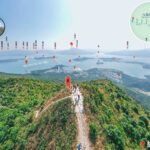
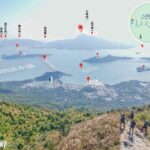
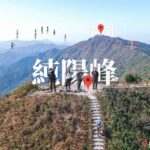
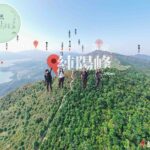
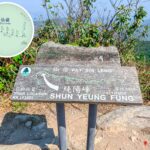
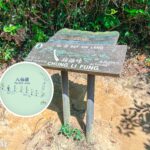
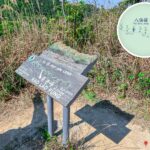
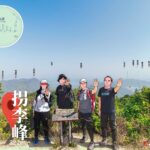
⛰️ 【Pat Sin Leng】 (八仙嶺) is a renowned mountain range located in northeastern New Territories, Hong Kong, straddling the boundary between Tai Po District and North District. Comprising eight distinct peaks ranging from 400 to 591 metres in elevation—including Shun Yeung Fung (591m) and Chung Li Fung (551m)—the range is named after the “Eight Immortals” of Taoist mythology, creating a strikingly unique undulating skyline. This mountainous terrain is protected within Pat Sin Leng Country Park. Designated in 1978, the park spans a vast 3,125 hectares, bordered by Plover Cove Reservoir to the east and the Sha Lo Tung wetlands to the west, serving as a critical ecological corridor for Hong Kong. Pat Sin Leng is famous for its demanding topography, particularly along the ridgeline profile of Wilson Trail • Section 9, where specific sections feature inclines exceeding 45 degrees. The range was also the site of a tragic hill fire in 1996 that claimed the lives of five teachers and students; the Spring Breeze Pavilion (Chun Fung Pavilion) monument was later erected to honor their memory. —
📌 Key Information
Item Details & Explanations 🏔️ Name Pat Sin Leng (八仙嶺), translating literally to the “Ridge of the Eight Immortals” 📍 Location Northeastern New Territories, Hong Kong, directly north of Tolo Harbour in Tai Po District; protected within Pat Sin Leng Country Park 🗺️ Coordinates 22°29′12.04″N, 114°13′25.52″E ⛰️ Peaks Profile Composed of eight stand-alone peaks: Sin Kwu Fung, Sheung Tsz Fung, Choi Wo Fung, Tsao Kau Fung, Kuai Li Fung, Kao Lao Fung, Chung Li Fung, and Shun Yeung Fung 🏞️ Highest Summit Wong Leng (639m), situated just west of Pat Sin Leng proper and frequently integrated into a single hiking itinerary 🌳 Country Park Pat Sin Leng Country Park, established in 1978, spanning an expansive area of approximately 3,125 hectares 🚶♂️ Trekking Route Wilson Trail • Section 9 and Section 10; the full traverse stretches roughly 12 km, taking 5–6 hours, and is rated as intermediate-to-advanced difficulty 🐦 Biodiversity Provides natural habitats for diverse wildlife, including dragonflies, egrets, butterflies, and pangolins; features grassy slopes, freshwater marshes, woodlands, and alpine streams 🔥 Historical Milestone The severe 1996 hill fire led to tragic casualties; the Spring Breeze Pavilion was built at the base of Sin Kwu Fung to commemorate the teachers who sacrificed their lives to save students Bus & Minibus Starting Point: Green Minibus Route 20C (running between Tai Po Market and Hok Tau Wai); Ending Point: Green Minibus Route 52B (running between Hok Tau and Fanling) 📸 Photography Spots The summit boulders of Shun Yeung Fung, Eagle Beak Rock, rolling silvergrass meadows, and sweeping vistas of Plover Cove Reservoir 🧭 Trail Advice Setting off before 9:00 AM is strongly advised; ensure you carry comprehensive gear, sun protection, and extra fluids. Expect scree, loose gravel, and steep, sudden inclines — Beyond its reputation as a premier mountaineering challenge, Pat Sin Leng boasts abundant ecological and hydrological importance. The range is primarily composed of ancient volcanic rock, giving rise to vital water systems such as the Tan Shan River and streams flowing off Cloudy Hill, which feed into the downstream Hok Tau Reservoir and Plover Cove Reservoir. The vegetation shifts dynamically across elevations, transitions from secondary forests and traditional feng shui woods on the lower slopes to resilient shrublands and high-altitude grasslands. The area supports notable species such as the Chinese pangolin, East Asian muntjac, and the endemic Romer’s tree frog. Notably, Sha Lo Tung on the northern slopes houses Hong Kong’s largest freshwater wetland, designated a Site of Special Scientific Interest (SSSI), while the Wang Chung Stream on the southeastern face stands out as a highly popular river-trekking route. —
— The range offers highly versatile route choices, allowing hikers to launch their trek from either Bride’s Pool or Tai Mei Tuk. While the 12-km traverse along Wilson Trail • Section 9 takes roughly 6 hours and requires experienced footing, casual alternative trails include the 4.4-km Pat Sin Leng Nature Trail or the scenic Hok Tau Country Trail. For transit options, visitors can catch KMB Bus Route 75K from Tai Po Market Station to Tai Mei Tuk, or take Green Minibus Route 20C towards Bride’s Pool to reach the trailheads. Whether you are seeking a demanding alpine ridge climb, an immersive eco-tour, or unforgettable vistas over the azure waters of Plover Cove, Pat Sin Leng beautifully exemplifies the rugged grandeur of Hong Kong’s wilderness. —
🚍 Public Transport Guide
Starting Point Minibus Route Endpoint Minibus Route Tai Mei Tuk (大美督) Route 20C Hok Tau (鶴藪) Route 52B —
🥾 Topography & Hiking Itinerary
- 📍 Geographical Position: Tai Po District, New Territories, closely neighboring Tai Mei Tuk
- 🗺️ Trail Distance: Approximately 12 km (including connecting spurs)
- ⏱️ Estimated Duration: Around 5–6 hours
- 🧗♂️ Difficulty Tier: Intermediate-to-Advanced; demands reliable physical conditioning
- 🌄 Landscape Panoramas: Looks northward out over Sha Tau Kok and southward across Plover Cove; the ridges are covered in dramatic blooms of silvergrass during autumn and winter
🚶♀️ Recommended Traverse Route (West to East)
Tai Mei Tuk → Sin Kung Fung → Pat Sin Leng Ridge → Shun Yeung Fung → Lei Uk Shan → Wong Leng → Ping Fung Shan → Hok Tau
—
🧙♂️ The Eight Summits & Taoist Immortals Profile
🏔️ Peak Name Corresponding Taoist Immortal Official Elevation Sin Kwu Fung (仙姑峰) He Xian’gu (何仙姑) 511 metres Sheung Tsz Fung (湘子峰) Han Xiangzi (韓湘子) 513 metres Choi Wo Fung (采和峰) Lan Caihe (藍采和) 489 metres Tsao Kau Fung (曹舅峰) Cao Guojiu (曹國舅) 508 metres Kuai Li Fung (拐李峰) Iron Crutch Li (鐵拐李) 522 metres Kao Lao Fung (果老峰) Zhang Guolao (張果老) 543 metres Chung Li Fung (鍾離峰) Zhongli Quan (漢鍾離) 551 metres Shun Yeung Fung (純陽峰) Lu Dongbin (呂洞賓) 590 metres —
🔥 Historical Milestone: The 1996 Hill Fire
On February 10, 1996, a catastrophic hill fire swept through Pat Sin Leng, leading to the tragic loss of three students and two teachers—an event that deeply moved the entire city. The fire unfolded along the vicinity of Monkey Cliff (馬騮崖), where intense, wind-driven flames quickly cut off escape routes along the steep terrain.
- Fatalities: 2 heroic teachers (Mr. Chow Chi-tsai and Ms. Wong Sau-mei) and 3 students.
- Injuries: 13 individuals.
- Inferred Cause: Suspected to have been accidentally ignited by a discarded cigarette.
🏛️ Spring Breeze Pavilion (Chun Fung Pavilion / 春風亭)
- Erected to pay lasting tribute to the selflessness of the teachers who gave their lives to protect their students.
- Officially inaugurated in 1996 by the last Governor of Hong Kong, Chris Patten.
- The pavilion landscape features planted Podocarpus pines and houses commemorative tablets inscribed in both Chinese and English.
- Prominent businessman Joseph Lau Luen-hung contributed HK$5 million to support the construction and fund-raising efforts.
—
🌿 Nature Trail Exploration & Ecosystems
Pat Sin Leng Nature Trail: Thoroughly equipped with bilingual interpretive signage detailing local landforms, flora, and fauna, making it an excellent destination for school field trips and family excursions.
- 🌾 Silvergrass Splendor: During autumn and winter, the upland meadows fill with shimmering white fields of silvergrass, ranking among Hong Kong’s absolute best seasonal foliage backdrops.
- 🌅 Open Vistas: Offers unobstructed, dramatic views looking directly north toward Sha Tau Kok and looking south across the sweeping blue expanse of Plover Cove Reservoir.
- 🐦 Avian Diversity: Frequently spotted native bird species include the cheerful Red-whiskered Bulbul and the Chinese Bulbul.
—
📸 Must-Capture Photography Hotspots
- 🌾 Ping Fung Shan: The dramatic, near-vertical grassy cliff walls evoke fairytale-like alpine imagery, widely regarded as one of Hong Kong’s top ten natural landscapes.
- 🐒 Monkey Cliff (馬騮崖): The historic location of the 1996 hill fire; overgrown with dense brush and exceptionally steep—novice hikers are advised to avoid scrambling here.
- 🌅 Shun Yeung Fung Sunset: The highest vantage point along the ridge profile, ideal for capturing golden hour reflections glinting over Tolo Harbour and Plover Cove Reservoir.
—
🧭 Mountaineering Field Advice
- 🧢 Gear Recommendations: Deploy reliable trekking poles, a wide-brimmed sun hat, a headlamp, and high-traction trail shoes. Carry ample drinking water and electrolyte replacement.
- 🕓 Seasonal Window: Late autumn through winter (October to February) offers cool temperatures, minimal rain, and prime silvergrass displays.
- 🚻 Sanitary Facilities: Public toilets are available at the main entrance to Hok Tau Reservoir; note that there are zero toilets or water stops once you commit to the high ridge section.
- 📱 Emergency Contact: For field support or reporting hazards, contact the Agriculture, Fisheries and Conservation Department (AFCD) via the Hong Kong Government hotline at 1823.
—