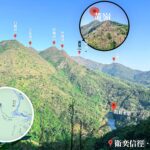
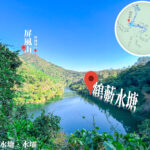
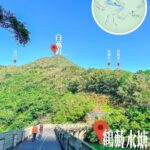
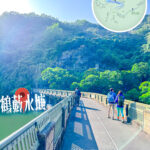
💧 【Water】 Although located along the coast, Hong Kong lacks large rivers and lakes, resulting in limited natural water resources. To meet the demands of its population of over seven million, Hong Kong has established a unique “Three-Source” system: local rainwater harvesting, Dongjiang (East River) water importation, and seawater flushing. This model, which combines nature, cross-border cooperation, and innovative technology, not only ensures a stable water supply but also makes Hong Kong one of the few cities globally to widely implement seawater flushing.
💧 Water Structure and Supply
Category Description 🌊 Local Reservoirs
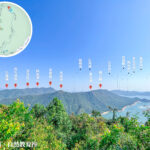
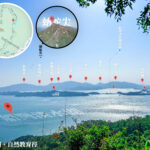
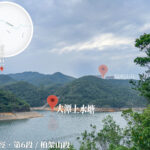
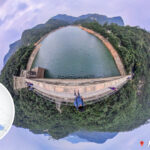
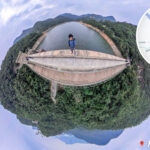
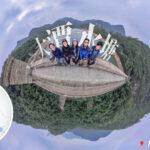
- High Island Reservoir — Located in Sai Kung; Hong Kong’s largest reservoir, featuring world-class geological landscapes.
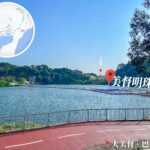
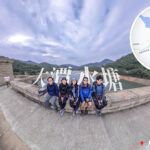
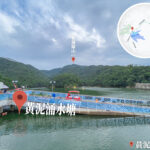
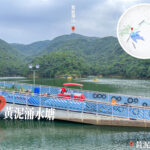
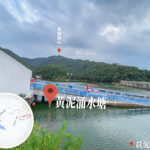
- Plover Cove Reservoir — The world’s first freshwater lake created by damming a sea bay; an engineering marvel.
- Shek Pik Reservoir — Located on Lantau Island; supports water supply for the airport and outlying islands.
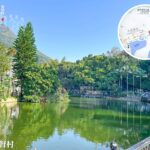
- Tai Tam Reservoir Group — Historic, built during the colonial era; witnesses the early development of Hong Kong’s water works.
🚰 Cross-Border Supply
- Since the 1960s, Hong Kong has relied on Dongjiang water from Guangdong Province; currently, about 70–80% of fresh water comes from the Dongjiang.
- The “Dongjiang-Shenzhen Water Supply Project” transports large volumes of fresh water daily to ensure a stable supply for the city.
🚽 Seawater Flushing
- Promoted in Hong Kong since the 1950s; currently covers over 80% of the population.
- Saves approximately 750,000 cubic meters of fresh water daily, equivalent to the capacity of a medium-sized reservoir.
— Hong Kong’s average annual rainfall is approximately 2,400 mm, but it is heavily concentrated in the summer months with significant year-to-year variation, making reliance on local water collection alone unsustainable. Consequently, Dongjiang water has become the primary pillar of supply, while seawater flushing significantly reduces fresh water consumption. In recent years, Hong Kong has also actively explored seawater desalination and reclaimed water to address challenges from climate change and population growth. These efforts demonstrate how Hong Kong uses wisdom and innovation to safeguard its water resources under limited natural conditions.
🔧 Water Quality and Management
- The Water Supplies Department (WSD) is responsible for water supply, testing, and network maintenance.
- Water Quality Standards: Complies with World Health Organization guidelines, employing multi-stage filtration, chlorination, and monitoring systems.
- Saltwater-Freshwater Separation System:
- Fresh water: For drinking, cooking, and cleaning.
- Seawater: For flushing, reducing the consumption of fresh water.
🏞️ Geographical and Cultural Features
- Reservoir Landscapes and Hiking:
- High Island Reservoir — Adjacent to hexagonal volcanic rock columns; a highlight of the Hong Kong UNESCO Global Geopark.
- Plover Cove Reservoir — Surrounded by hiking trails; a popular spot for citizens to hike and cycle.
- Tai Tam Reservoir Group — A historic architectural cluster; bridges and masonry dams are recognized as cultural heritage.
- Water Culture:
- Hong Kong people have a deep sense of reliance on and appreciation for “water” due to limited local availability.
- “Seawater flushing” has become a unique urban symbol of Hong Kong, embodying innovation and environmental sustainability.
- Reservoirs and dams serve as venues for recreation, photography, and education.
🌦️ Climate and Rainfall
Item Data / Description Characteristics 🌧️ Average Rainfall ~2,400 mm/year High rainfall area with abundant annual supply, but uneven distribution. ⏳ Seasonal Distribution 85% concentrated in the wet season (April–September) Frequent heavy summer rains, with supply pressure in the dry season. 🔮 Future Trend Expected to increase by 4.7–9% by 2100 Higher rainfall but with continued high volatility; reliance on reservoirs and cross-border supply remains essential. 🔧 Exploration of New Water Sources
Category Description Examples / Data Advantages Challenges 🌊 Desalination Converting seawater to fresh water. Tseung Kwan O Desalination Plant is now operational.
- Independent of rainfall
- Increases supply diversity
- Proven technology
- High cost
- Energy intensive
- Brine management
♻️ Reclaimed Water Utilizing treated sewage for non-potable uses. Used for industry, irrigation, or flushing.
- Reduces sewage discharge
- Promotes circular economy
- Reduces cross-border dependence
- Limited public acceptance
- High treatment standards required
- High infrastructure investment
☔ Rainwater Harvesting Collecting and using urban rainfall. Installed in building roofs and public facilities.
- Simple and easy
- Enhances urban sustainability
- Reduces drainage pressure
- High seasonality
- Limited coverage
- Requires maintenance
🌟 Data and Trivia
- Daily water demand in HK: ~2.7 million cubic meters.
- Seawater flushing coverage: Over 80% of the population.
- Water tariff: Regulated as a public service, prices are relatively affordable.
- Total number of reservoirs: Over 20 major reservoirs.
- Plover Cove Reservoir‘s capacity exceeds 240 million cubic meters; one of Hong Kong’s largest water storage projects.
🔮 Challenges and Future Development
- Climate Change: Unstable rainfall patterns require strengthened water resource management.
- Cross-border Dependence: While Dongjiang supply is stable, Hong Kong maintains ongoing negotiations and cooperation.
- Reclaimed Water: The government is researching the application of reclaimed water for industrial and irrigation use.
- Smart Water Management: Introduction of digital monitoring systems to enhance pipe network efficiency.
💧 Evolution Timeline of Hong Kong Water Resources
Year Event / Policy Characteristics & Impact 1930s Construction of major reservoirs like Tai Tam Established the foundation of local water collection systems. 1950s Implementation of seawater flushing A rare global system; reduces fresh water consumption. 1965 Agreement signed with Guangdong for Dongjiang water First cross-border water supply to solve severe shortages. 1987 Completion of the Shenzhen-Hong Kong Water Supply Project Improved cross-border capacity and保障 supply stability. 1998 Long-term water supply agreement Ensures stable Dongjiang supply; mitigates political/environmental risks. 2000s Research on reclaimed water and rainwater harvesting Exploring sustainable development and diversification. 2015 Government proposes Desalination Plan Pioneering new water sources to combat climate change. 2022 Tseung Kwan O Desalination Plant commences operation Hong Kong officially gains desalinated water supply capability. Present Three-Source System A diversified, stable system integrating local collection, imported water, and technology.