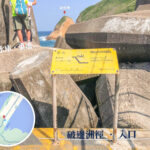
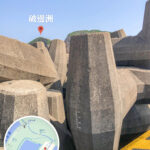
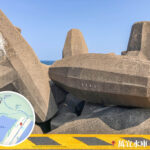
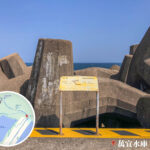
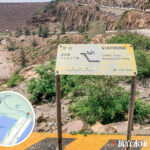
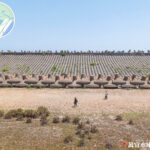
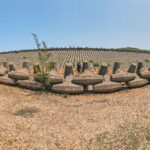
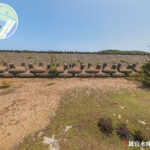
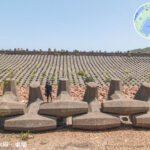
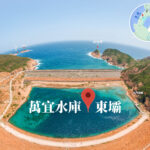
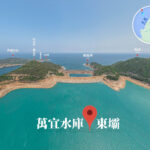
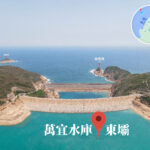
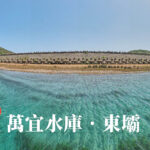
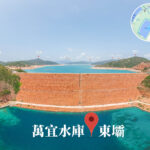
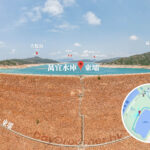
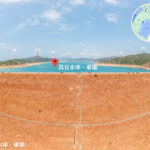
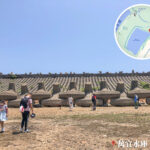
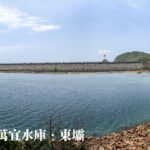
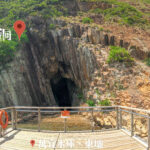
💧【High Island Reservoir • East Dam (萬宜水庫 • 東壩)】 is the core landmark of the Hong Kong UNESCO Global Geopark. Tucked inside the Sai Kung East Country Park, it was constructed in the 1970s as part of a massive project to block the sea and create the High Island Reservoir. This colossal dam is famous worldwide for its unique anchor-stone breakwater, where over 10,000 double-T-shaped concrete precast blocks stretch out into the ocean. Beyond their practical role in breaking heavy waves, these blocks form a visually striking, modern industrial landscape that creates a stunning contrast with the ancient hexagonal rock columns nearby. —
📌 Quick Facts
Category Details 📍 Location Inside Sai Kung East Country Park, New Territories, Hong Kong. It was originally the Kwun Mun Channel, tucked between High Island (Leung Shuen Wan) and the Sai Kung Peninsula. 🗓️ Construction Time Broke ground in 1971 and wrapped up in 1978. It stands as one of Hong Kong’s most massive public works projects of the 1970s. 💧 Storage Capacity Around 281 million cubic meters, making it the largest reservoir in Hong Kong by storage volume. 🧱 Dam Structure The main dam stretches 1,593 feet long and towers 348 feet high. 🧊 Breakwater Design The auxiliary dam features a breakwater packed with over 2,500 double-T-shaped concrete dolosse blocks, each weighing a whopping 25 metric tons. 🌋 Geological Wonders Home to globally rare rhyolitic volcanic hexagonal rock columns, formed during intense super-volcano activity around 140 million years ago. 🧭 Geological Heritage Selected in 2022 as one of the First 100 IUGS Geological Heritage Sites, carrying immense scientific and educational value. 🧭 Geological Trail The High Island Geo Trail is flat and easy to walk. Packed with informative signboards, it is perfect for families and geology buffs alike. 🌊 Coastal Landforms Features sea caves, sea cliffs, and sea arches that interlace beautifully with the rock columns to create a majestic coastline. 🧪 Rock Characteristics The hexagonal columns are composed of silica-rich rhyolitic volcanic rock. They average 1.2 meters in diameter (reaching up to 3 meters) and rise up to 100 meters high. 🧬 Geological Warping Distinctive S-shaped bends can be seen in the columns, caused by tectonic forces warping the plastic rock columns while they were still cooling. 🏘️ Historical Background The site was originally the Kwun Mun Channel. Building the reservoir flooded several local villages, including Lan Nei Wan Village. 🧭 GPS Coordinates Approximately 22°21′50″N 114°22′20″E 🌅 Scenic Views The top of the dam is a prime spot to catch a magnificent sunrise while soaking in the ocean breeze—a massive favorite for photography lovers. —
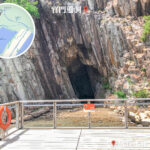
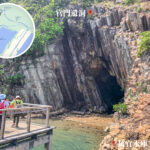
— The area around the East Dam is a goldmine of precious geological heritage. Here, you can get up close to the rhyolitic hexagonal rock columns formed by a super-volcanic eruption 140 million years ago. These columns reach up to two meters in diameter and tower vertically like a massive, natural pipe organ. The sea cave, nicknamed the “King Kong Ring,” showcases an arched structure carved out of the rock columns by relentless waves. Combined with the Po Pin Chau sea stack, sheer cliffs, and volcanic collapse structures, this site serves as one of Asia’s most spectacular open-air igneous geology classrooms. —
🌋 Breaking Down the Geological Wonders
🔶 Hexagonal Volcanic Column Clusters
- Formed after the eruption of the “High Island Super-volcano” around 140 million years ago, where thick lava cooled and contracted uniformly to create hexagonal cracks.
- Unlike typical dark basalt columns found elsewhere in the world, Hong Kong’s columns are made of rhyolitic volcanic rock. They are rich in silica, give off a light grey-beige hue, and contain quartz and potassium feldspar.
- The columns average 1.2 meters in diameter (with the largest reaching 3 meters), rise up to 100 meters high, and span an area of over 100 square kilometers across both land and sea.
- Recognized globally for their rare composition, they were listed among the world’s top geological heritage sites in 2022.
- The wider volcanic formation extends across the ocean to include the Ninepin Group (Kwo Chau Islands), Tai Long Wan, and beyond.
🔀 S-Shaped Curved Columns
- These columns warped into dramatic curves due to tectonic movements that squeezed the rock before the lava had completely solidified.
- A dark-colored rock dyke cuts straight through the middle—a mark left by a later intrusion of basic magma, creating a fascinating geological crossover.
🌊 Sea-Eroded Landforms
- Includes sea caves, sea cliffs, and sea arches, with the most famous icon being Po Pin Chau.
- Po Pin Chau was originally connected to Fa Shan, but centuries of wave erosion along a fractured rock zone completely sliced it off into a standalone sea stack island.
— Getting there is simple: take Bus 94 from Sai Kung Town Center to Pak Tam Chung, then switch to the holiday-exclusive Green Minibus 9A straight to the top of the dam. The East Dam features a geo-trail, viewing platforms, and public restrooms. However, take note that the dam has virtually no shade and handles strong ocean winds, so it is highly recommended to bring a windbreaker and plenty of drinking water. Blending human engineering brilliance with raw natural wonders, it has become one of Hong Kong’s most iconic spots for eco-education and landscape photography. —
🚶♀️ Hiking Tips & Transport
- Trail Length: Around 1.4 kilometers (approx. 2 hours round trip).
- Facilities: Information boards, viewing platforms, a wooden boardwalk, and public toilets.
- How to Get There:
- Holiday Minibus 9A (leaving straight from Sai Kung Town Center/Pak Tam Chung).
- Join an official guided geopark tour.
- Take a boat tour from Sai Kung to view Po Pin Chau and the sea-carved landforms from the water.
—
📸 High Island Geo Trail Highlights
Attraction Name Features & Description S-Shaped Curved Columns Columns warped by tectonic forces while cooling down before full solidification. Combined with a later rock dyke intrusion, this formation is incredibly rare worldwide. Dark Rock Dyke A dark basic magma intrusion that cut through a weak zone in the curved columns, creating a sharp, beautiful color contrast. Po Pin Chau A spectacular standalone sea stack island that was split from the Fa Shan headland by relentless wave action along a rock fault line.
Attraction Name Features & Description Sea Caves & Sea Cliffs Formed by waves pounding into weak points along the rock columns, allowing visitors to view the raw power of coastal erosion at close range. The Breakwater An epic engineering defense made of 2,500 interlocking double-T-shaped concrete dolosse blocks, each weighing 25 metric tons. Sea Cave Wooden Boardwalk Built in 2016, this stable wooden path allows visitors to safely walk right up to the mouth of the sea cave and peek inside. —
🏗️ Engineering Feats: Building a Reservoir in the Sea
- The Method: Two colossal main dams (East Dam and West Dam) were constructed to seal off both ends of the Kwun Mun Channel, connecting High Island with the Sai Kung Peninsula.
- Wave Defense: Because the East Dam faces the open South China Sea, it features an extra auxiliary dam and a massive block breakwater to absorb heavy waves. The West Dam faces an inner bay, so it is simpler and built with stacked rocks.
- The Challenge: Engineers had to completely drain the seawater from the channel, clear out thick layers of seabed mud, and then fill it with fresh rainwater—a pioneering engineering feat at the time.
—
🏘️ History & Cultural Heritage
- The site was originally the Kwun Mun Channel. Before the reservoir could be built, several local villages had to be relocated, including Lan Nei Wan Village, which was renamed Man Yee Wan Village.
- The villagers were predominantly Hakka people who made their living through fishing and farming. They were relocated to newly built village housing blocks right in Sai Kung Town Center.
- The reservoir was originally set to be named “High Island Freshwater Lake” but was ultimately named “High Island Reservoir” (Man Yee Reservoir in Chinese) to honor and remember the flooded village.