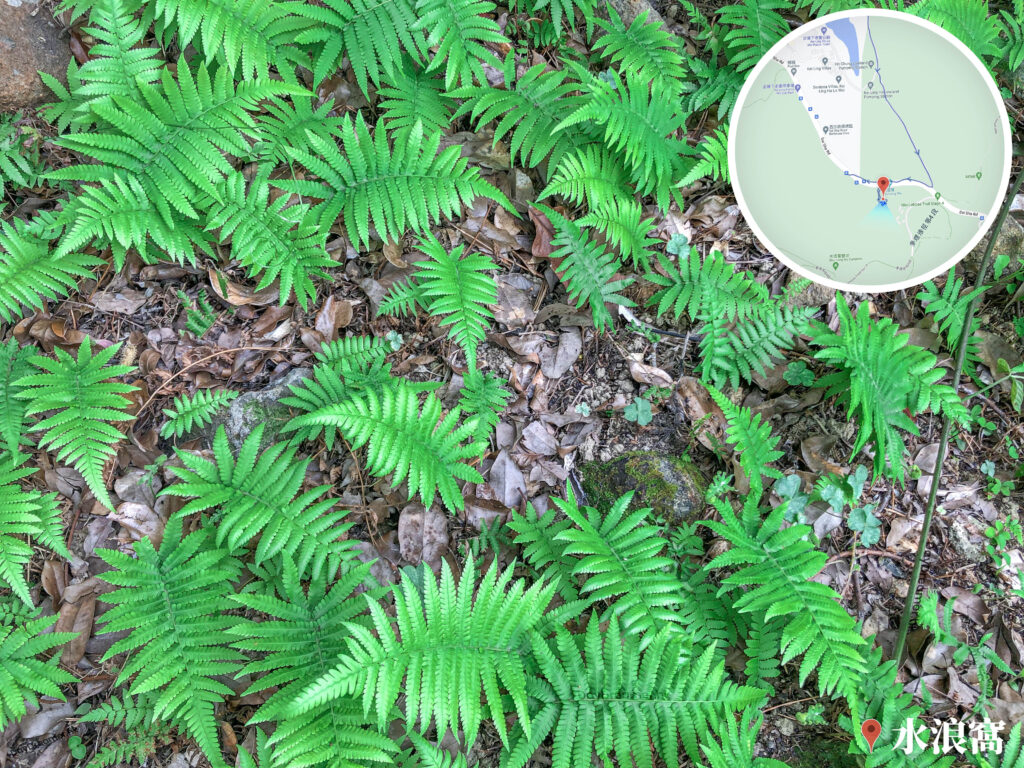
Thelypteridaceae (commonly known as the marsh fern family) comprises terrestrial ferns with simple or once-pinnate fronds, where the lower pinnae are typically somewhat shortened. Each pinnule features pinnate veinlets, where adjacent veinlets fuse together, and from this junction, an excurrent veinlet extends to the sinus between the segments—a diagnostic trait known as the “Cyclosorus-type” venation. Globally, only the scales of the Thelypteridaceae family bear long hairs. The sori are round or linear, and most lack an indusium. They are widely distributed throughout tropical and subtropical regions worldwide, with a few species in temperate zones, particularly thriving in Asia. The family contains over 20 genera and nearly 1,000 species, mostly growing in low-altitude regions, though a rare few tropical species can reach elevations of up to 4,500 metres. China is home to 18 genera and about 365 known species, primarily distributed across the low mountain areas south of the Yangtze River, with a high concentration in the subtropical regions of South and Southwest China, where some genera originated or have their center of distribution.